 $@!
$@!


Best DSA in c++ tutorial
$@!
?
 Dima
Dima
no
 Hitta
Hitta
 touhou
Rs is currency?
Yeah, short form for Indian rupees.
But the actual symbol is ₹.
Most of the times the symbol won't be present in default keyboard or hard to find. So they use "rs".
 DaviChan
Yes
Thank you for the interest 😊. Should i start from 0 also, like most other playlists do or only cover topics that are hard to find otherwise
DaviChan
Or don't get covered properly?
DaviChan
Because there are some 😅
DaviChan
At least in the playlists I have seen so far
 Daulet
Thank you for the interest 😊. Should i start from 0 also, like most other playlists do or only cover topics that are hard to find otherwise
video for beginners more popular than exclusive content
DaviChan
That is very true!
DaviChan
let's see. I will plan it out today and will record the first videos tomorrow :)
Any topic wishes/suggestions already?
Daulet
let's see. I will plan it out today and will record the first videos tomorrow :)
Any topic wishes/suggestions already?
Idk what popular in C++ for beginners. But maybe videos about templates & constexpr relevant in current time
DaviChan
concepts etc. modules and so on are also cool and not too well covered yet
DaviChan
lets see 😅🤔
Aze
Not sure if I am getting you here. You want a game of yours be released on Arc8 or what?
Ольга
https://onlinegdb.com/nWEjjT85v
Good evening, please help me, I always want to understand this topic and it doesn't work out, and here's an error in the code again. I will be very grateful for any advice, help or explanation
Dima
Tlistitem does not contain “first” and “last”
you need to find it through the list
you probably need to use Tlist
Ольга
Tlistitem does not contain “first” and “last”
you need to find it through the list
you probably need to use Tlist
Thank you very much for the advice
 а
DaviChan
а
DaviChan
Whats wrong about Clion?
 《K•r•e•m•e•l》
Does anyone here use Kate editor? In linux?
《K•r•e•m•e•l》
When I run gcc and try to compile a file in it says there is a warning for main.h header file but I have not problem in the file...
Daulet
When I run gcc and try to compile a file in it says there is a warning for main.h header file but I have not problem in the file...
Do you turn on or installed lsp server?
Daulet
Like clangd
DaviChan
Its a very good text editor though
《K•r•e•m•e•l》
Yes, but only for very small things
Its showing Chinese in any file that I open through it...that I have copied from one directory to another
DaviChan
at least not that I am aware
Daulet
no compiler has that I guess
I used micro editor. And I think micro just runs compiler for check code, but lsp server will be a lot faster than that
the best for everyone
u r using the biggest peace of shit i've ever seen
could you send me the entire code to see that because I have made as you told me but nothing changed
the best for everyone
u r using the biggest peace of shit i've ever seen
https://dpaste.org/Q5iGP
the best for everyone
I did it like this
the best for everyone
and its not working
 klimi
klimi
u r using the biggest peace of shit i've ever seen
Could say the same about your message, if you are going to claim such things append your reasoning to the message as well as you don't just create havoc. Thank you
 Shahadat Shanto
https://hastebin.com/iqatuqucuw.cpp
Shahadat Shanto
https://hastebin.com/iqatuqucuw.cpp
this code Counts the number of nodes at given level in a tree using BFS. How to print those nodes? Please help
Anonymous
 Shahadat Shanto
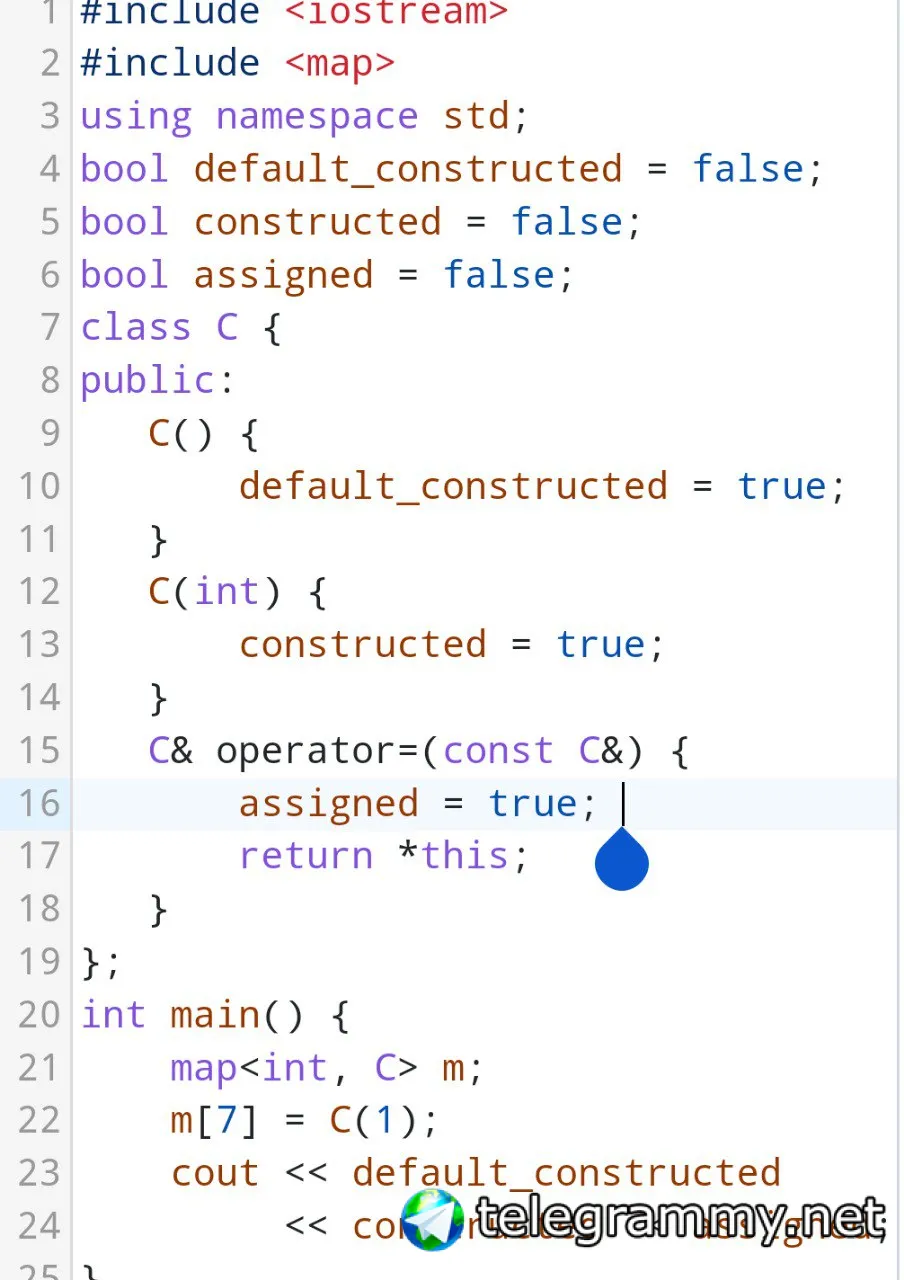
If two consecutive character is same in a string array, how to remove both of them?
Raval
Hello
Vaghela
What is the while loop in c language please tell me with the example
Rajeev
this will fast our IO - cin.tie(0);
But why we have to write this.
Everyone wants that his code will executes fast. Then why C developer didn't make it permanent.
Main question- what is happening inside cpu if we run our code with large input and output.
Case 1 - cin.tie(0)
Case 2 - cin.tie(1)
I know it's silly questions but please solve my doubt.
Shahadat Shanto
What is the while loop in c language please tell me with the example
while loop is a conditional iterator as like for loop. In while loop, we run a loop until a certain condition is matched.
eg. Say you have t = 2 test cases and you want to run the loop until t = 0, then your while loop would be:
while(t--)
{
statement;
}
 \Device\NUL
std::cin.tie() by default tied with ostream, make sure ostream is flushed before reading from istream.
More flush mean more write syscall so it would slower.
ostream is by default fully buffered.
It will be flushed when
- find newline (default iostream synced with stdio, std::ios_base::sync_with_stdio(true))
- flushed manually by std:endl or std::flush
- reading from input stream by default because std::cin.tie(&std::cout)
With std::cin.tie(nullptr), you can manually decide when flushing ostream
\Device\NUL
What happen inside cpus is just bunch of assembly
 Ludovic 'Archivist'
What happen inside cpus is just bunch of assembly
Partial truth (as CPUs are fairly complicated to say the least)
Ludovic 'Archivist'
this will fast our IO - cin.tie(0);
But why we have to write this.
Everyone wants that his code will executes fast. Then why C developer didn't make it permanent.
Main question- what is happening inside cpu if we run our code with large input and output.
Case 1 - cin.tie(0)
Case 2 - cin.tie(1)
I know it's silly questions but please solve my doubt.
A lot of things do happen whatever you run. Large IO generally means moving memory from one point to the other.
A terminal (or tty) is generally an in memory device. What happens when doing large IO is that on syscall, the kernel will allocate some pages to the file descriptor of the tty and write your data to that.
All of that, from the point of view of the CPU, involves virtual memory allocation, physical memory allocation, a lot of memory going up and down the different levels of cache, cache and branch prediction, and hundred more tiny parts working together for everything to go well
Ludovic 'Archivist'
(and I am not even going down to microcode level and pipeline level)
\Device\NUL
What happen inside cpus is just bunch of assembly
Maybe signicant of CPU instruction that invoke syscall which make IO slower
 Captain
Anonymous
\Device\NUL
Captain
Anonymous
\Device\NUL
why not try it on online compiler
Daulet
37.00
Anonymous
this will fast our IO - cin.tie(0);
But why we have to write this.
Everyone wants that his code will executes fast. Then why C developer didn't make it permanent.
Main question- what is happening inside cpu if we run our code with large input and output.
Case 1 - cin.tie(0)
Case 2 - cin.tie(1)
I know it's silly questions but please solve my doubt.
First of all cin.tie(1) should give you a compiler error. Perhaps you meant cin.tie(&cout).
Anyway cin.tie(nullptr) will make your code slightly faster and a lot faster if you have lots of intermediary and regular outputs and quite a few inputs in between.
But at what cost? The whole idea of tying an output stream to an input stream is to ensure that all output buffers get flushed before input begins. This is to ensure that any input prompts you may have like "Enter your name" et al get printed before your input begins. They serve as a useful guide to the user of your program. However if yours is. a program where users don't need prompts and they know what to input when, you can then certainly feel free to use cin.tie(nullptr) to ensure that no flushing happens unless the buffer is full or when you specifically ask for it.
The reason why flushing an output buffer is slow is because the kernel has to write the contents of the buffer to another region (it could be a memory mapped region in which case it would be faster through a virtual driver or it may require a call to the underlying device driver of the device you are writing to which could be slow). That is why it's advisable to not use manipulators like endl frequently when you are writing something like a Logger service especially when the log level is INFO or DEBUG or TRACE. There is a disadvantage here as well. Incase your program crashes, then the contents of the output buffer are not flushed and you may end up losing some logs. So it takes careful jurisprudence on your part to determine when flushing is necessary.
 Atamba
Hi guys.
Atamba
Has anyone tried facebook infer while developing in C/C++?
Atamba
If so, does it work? I'm developing on Linux(ParrotSec distro).
Atamba
... yet, I get a ton of errors for not recognizing iostream pre-processor header file.
\Device\NUL
\Device\NUL
Please clearly tell what you have done to reproduce the issue
Atamba
Install from package manager ?
I mean, the compilers are already installed, only when I try to check for ways to optimize my code using the infer static analyzer, I get the errors.
Atamba
Please clearly tell what you have done to reproduce the issue
Here is my CLI command to invoke infer.
infer — g++ MoreGreedy.cpp -o mg
Atamba
Here is my CLI command to invoke infer.
infer — g++ MoreGreedy.cpp -o mg
This is the dumped errors.
Capturing in make/cc mode...
MoreGreedy.cpp:2:10: fatal error: 'iostream' file not found
#include <iostream>
^~~~~~~~~~
1 error generated.
Aborting translation of method 'main' in file 'MoreGreedy.cpp'
Known incorrect assumption in the frontend: Expected source expression for OpaqueValueExpr
Error: the following clang command did not run successfully:
/opt/infer-linux64-v1.1.0/lib/infer/facebook-clang-plugins/clang/install/bin/clang-11
@/home/atamba/Documents/projects/steve/more_greedy/infer-out/tmp/clang_command_.tmp.60ce1e.txt
++Contents of '/home/atamba/Documents/projects/steve/more_greedy/infer-out/tmp/clang_command_.tmp.60ce1e.txt':
"-cc1" "-load"
"/opt/infer-linux64-v1.1.0/lib/infer/infer/bin/../../facebook-clang-plugins/libtooling/build/FacebookClangPlugin.dylib"
"-add-plugin" "BiniouASTExporter" "-plugin-arg-BiniouASTExporter" "-"
"-plugin-arg-BiniouASTExporter" "PREPEND_CURRENT_DIR=1"
"-plugin-arg-BiniouASTExporter" "MAX_STRING_SIZE=65535" "-cc1" "-triple"
"x86_64-unknown-linux-gnu" "-emit-obj" "-mrelax-all" "-disable-free"
"-disable-llvm-verifier" "-discard-value-names" "-main-file-name"
"MoreGreedy.cpp" "-mrelocation-model" "static" "-mframe-pointer=all"
"-fmath-errno" "-fno-rounding-math" "-mconstructor-aliases"
"-munwind-tables" "-target-cpu" "x86-64" "-fno-split-dwarf-inlining"
"-debugger-tuning=gdb" "-resource-dir"
"/opt/infer-linux64-v1.1.0/lib/infer/facebook-clang-plugins/clang/install/lib/clang/11.1.0"
"-include"
"/opt/infer-linux64-v1.1.0/lib/infer/infer/bin/../lib/clang_wrappers/global_defines.h"
"-internal-isystem"
"/usr/lib/gcc/x86_64-linux-gnu/11/../../../../include/c++"
"-internal-isystem"
"/usr/lib/gcc/x86_64-linux-gnu/11/../../../../include/c++/x86_64-linux-gnu"
"-internal-isystem"
"/usr/lib/gcc/x86_64-linux-gnu/11/../../../../include/c++/backward"
"-internal-isystem" "/usr/local/include" "-internal-isystem"
"/opt/infer-linux64-v1.1.0/lib/infer/facebook-clang-plugins/clang/install/lib/clang/11.1.0/include"
"-internal-externc-isystem" "/usr/include/x86_64-linux-gnu"
"-internal-externc-isystem" "/include" "-internal-externc-isystem"
"/usr/include" "-Wno-ignored-optimization-argument" "-Wno-everything"
"-fdeprecated-macro" "-fdebug-compilation-dir"
"/home/atamba/Documents/projects/steve/more_greedy" "-ferror-limit" "19"
"-fgnuc-version=4.2.1" "-fcxx-exceptions" "-fexceptions" "-o"
"/tmp/MoreGreedy-ddbe77.o" "-x" "c++" "MoreGreedy.cpp" "-O0" "-include"
"/opt/infer-linux64-v1.1.0/lib/infer/infer/bin/../lib/clang_wrappers/global_defines.h"
"-Wno-everything"