 Anonymous


This is straight up gaslighting
Anonymous
:/ the second paragraph is still wrong. Output iterators have nothing to do with streams and operator<< (other than std::ostream_iterator being an output iterator, but that still is about assignment, not <<)
Forward iterators are still not output iterators by default, as seen from the godbolt example.
the const iterator was a forward iterator, but since assignment was invalid to the dereferenced vector, it was not an output iterator.
the normal iterator was both a forward and an output iterator.
I intentionally chose std::vector<std::vector<int>> because then operator<< won't exist for sure.
 Andrew
anyone know open gl?
Anonymous
I did not even mention tags
Support ≠ guarantee. Guarantee is only available when the forward iterator is also an output iterator (forward iterator + output iterator == mutable forward iterator). This guarantee is what my initial question was and what I was talking about repeatedly. I never changed that.
You didn't address the stream and << parts
Anonymous
how do i specify T to be both an std::output_iterator and an std::forward_iterator?
What can be more clear than this first message.
Anonymous
no i want T to satisfy both output iterator and forward iterator requirements
And this second message
Anonymous
Yes that was my mistake.
Anonymous
Forward iterator is not much more (i assume by "much more" you mean superset) than output iterator. It's different. Since not all forward iterators are output iterators.
Anonymous
That is agreeable
Anonymous
*x = value; should work for some forward iterator x
I did provide this and others where it was clear i wanted to assign to *x
Anonymous
Well
Anonymous
------o------
I hope everyone's popcorn is finished by now
Anonymous
I get that when someone says anything other than an input iterator, mutability is often assumed.
I was talking about std::output_iterator specifically because i did not want to make the assumption and joining the std::output_iterator concept provided the guarantee without the need to make the assumption.
Anonymous
But i know how to do that with type traits already. I specifically wanted the concepts
Anonymous
So asked that
Ahmed
Guys i have a question
When i am writing a code in c++
Should i right at the top of my code
Using namespace std?
Many people just write
std::cout every time in things like that instead
 Dima
Dima
write std:: explicitly
Dima
Duplicates may occur
Ahmed
Okay but i am using simple programs can u specify what does duplicates mean because i have read about this topic and i donot get what they mean with duplicate
 vinícius*
Guys i have a question
When i am writing a code in c++
Should i right at the top of my code
Using namespace std?
Many people just write
std::cout every time in things like that instead
it's "ok" to use that in source files
vinícius*
but not on header files, as the namespace use propagates
vinícius*
a slightly better option is to use
using std:: vector
and so on
vinícius*
a slightly better option is to use
using std:: vector
and so on
but yet again, not on header files
Ahmed
Okay i got it. Thanks
Ishikawa
Could someone kindly tell me why string and int variables stored in 24 and 4 bits respectively?
I'm fairly new to programming.
Ishikawa
*variables are stored in
Ishikawa
Also *bytes, not bits
Lakshmanan
Hi
 Ammar
Ammar
Could someone kindly tell me why string and int variables stored in 24 and 4 bits respectively?
I'm fairly new to programming.
std::string is not a primitive data type. It is a class, like a struct. A class can contain properties. The size of it depends on its properties.
Why is int 4 bytes, because it is 32 bit integer, meaning it requires 4 bytes to store the value.
Some aliases you need to know:
char = int8_t is 8 bit integer, so it is 1 byte.
short = int16_t is 16 bit integer, so it is 2 bytes.
int = int32_t is 32 bit integer, so it is 4 bytes.
Ishikawa
std::string is not a primitive data type. It is a class, like a struct. A class can contain properties. The size of it depends on its properties.
Why is int 4 bytes, because it is 32 bit integer, meaning it requires 4 bytes to store the value.
Some aliases you need to know:
char = int8_t is 8 bit integer, so it is 1 byte.
short = int16_t is 16 bit integer, so it is 2 bytes.
int = int32_t is 32 bit integer, so it is 4 bytes.
But how is it(int) then able to store integer values larger than 4 characters, say 11111 for example.
Ammar
But how is it(int) then able to store integer values larger than 4 characters, say 11111 for example.
You should think in binary.
Ishikawa
Yeah binary. But won't one character be stored in one byte regardless of what it is.
 Vlad
Vlad
Vlad
Vlad
Same deal as 100 vs one hundred sticks to represent the number
Ishikawa
 Ishikawa
 Ammar
Ammar
Yeah binary. But won't one character be stored in one byte regardless of what it is.
1 character is indeed stored in one byte.
But this:
int x = 1000;
Does not mean the memory stores 4 chars that contain '1', '0', '0', '0'.
Ishikawa
Vlad
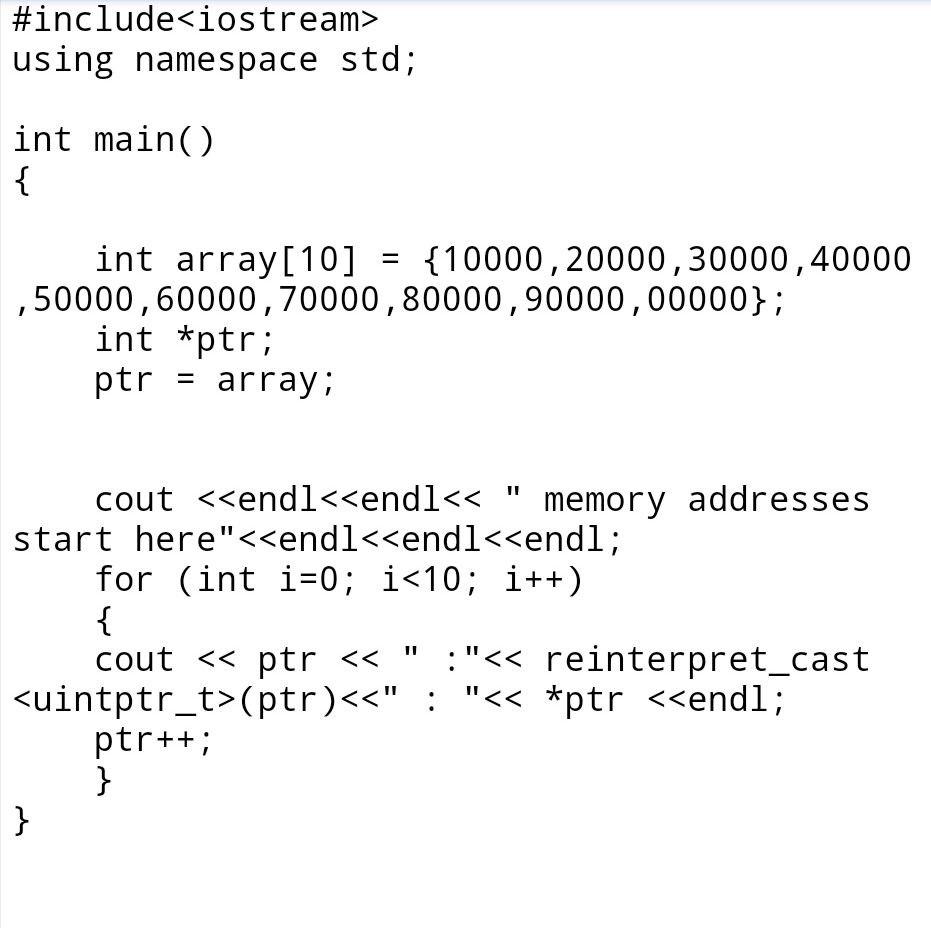
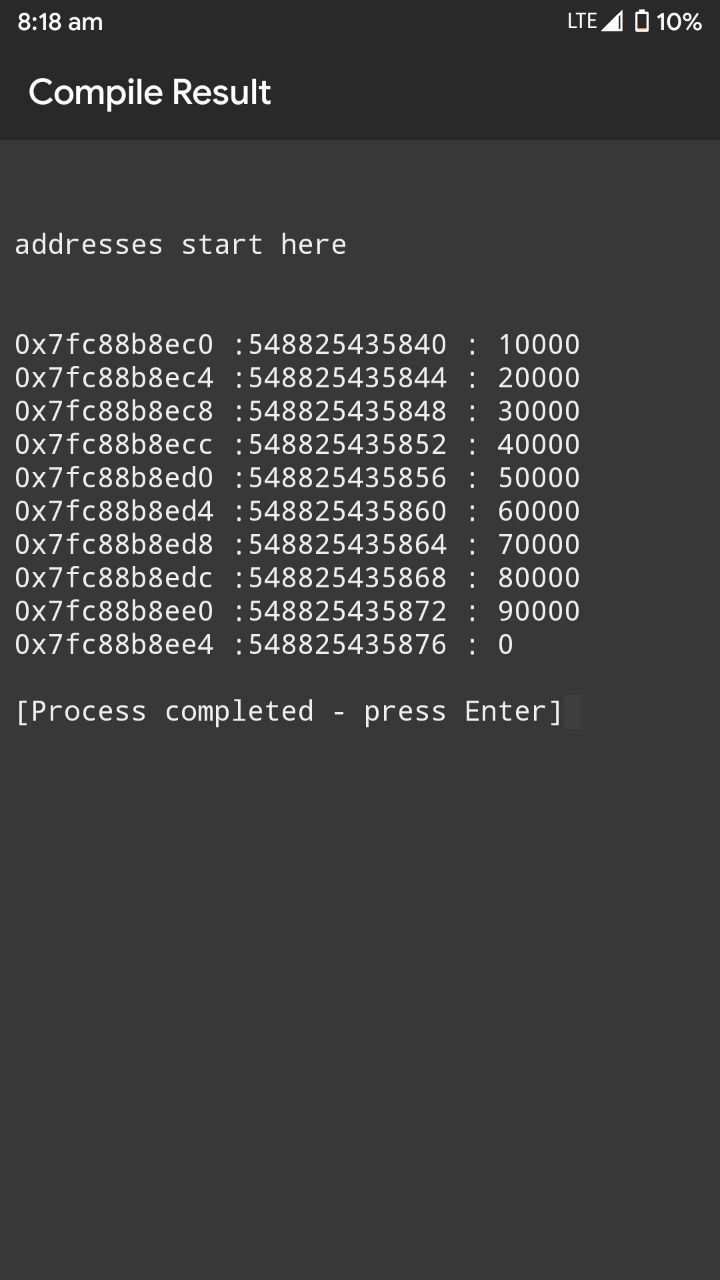
How can 10000 be stored between 548825435840 and 548825435844 ? (Five bytes in 4 bytes' memory) ?
It is not '1','0', '0', '0', '0'
Ishikawa
It is not '1','0', '0', '0', '0'
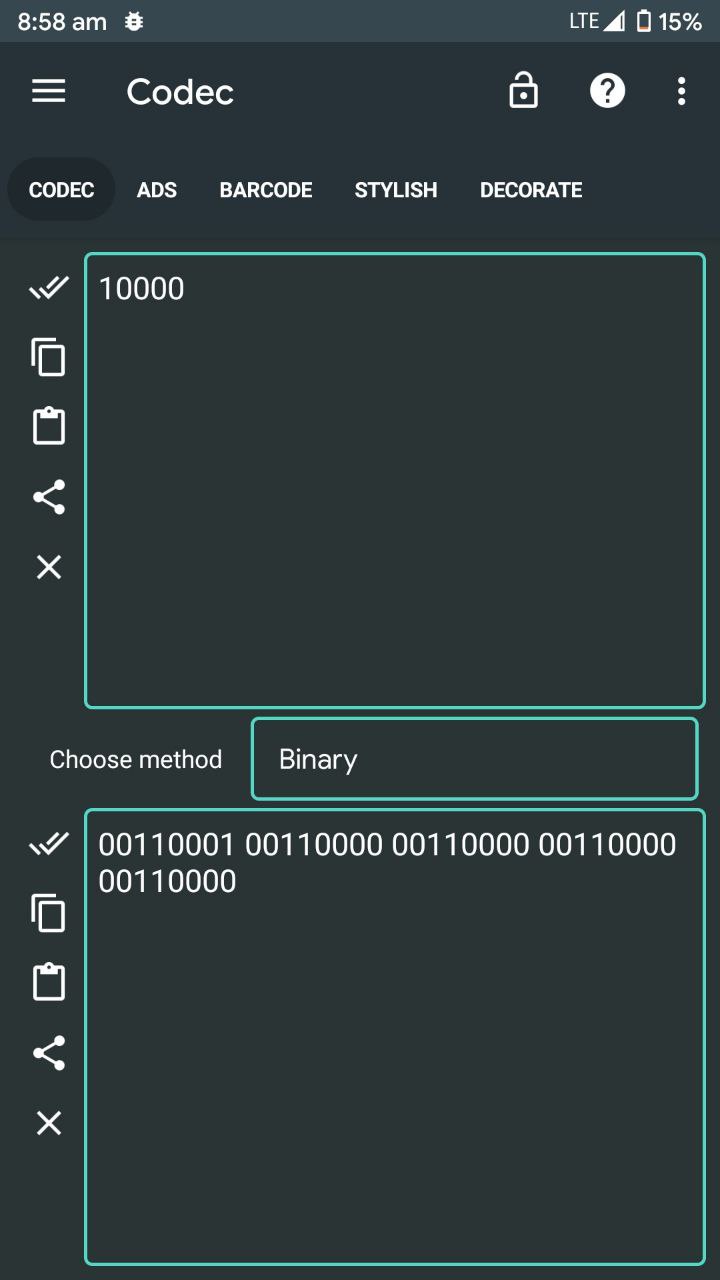
Yeah, I understand it is not binary 1 0 0 0 0, buy either way it each of them should take 1 byte, 5 bytes in total isn't it. Take 20000 otherwise.
Ishikawa
Vlad
Ammar
How can 10000 be stored between 548825435840 and 548825435844 ? (Five bytes in 4 bytes' memory) ?
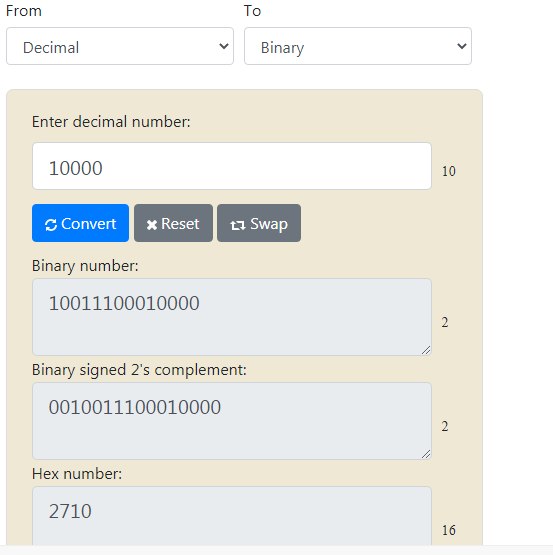
int x =10000; in binary representation is 00000000000000000010011100010000
It takes 32 bits (count the binary digits, leading zero may not be written, but it is still stored in memory).
That means in your physical memory (RAM) stores
00000000000000000010011100010000 at some location.
32 bits is 4 bytes. That is why integer 4 bytes.
Vlad
Vlad
And oddly enough integer which is 32 bits can store 2^32 different states
Ammar
@Ishikawa I think you should learn computer organization and architecture first. It is the fundamental of your above question.
Ishikawa
 Ishikawa
Ammar
Ishikawa
Ammar
 Ishikawa
Please explain a lil bit more
Vlad
 Vlad
Vlad
Where each bit is 2 to the power of the bit's order
Ammar
Vlad
0b1101 = 1 * 2^3 + 1 * 2^2 + 0 * 2^1 + 1 * 2^0 = 8 + 4 + 0 + 1 = 13
Ammar
Search for "Number Base Conversion" on YouTube and watch it.
Ishikawa
I know that conversion. I just could not thik that way and converted each byte separately. Thank you very much kind people.
Ishikawa
But again, how do string variables store more than 24 characters?
Ammar
But again, how do string variables store more than 24 characters?
std::string is a class, it has dynamic allocator that allows you to store chars dynamically.
For example:
std::string x;
x = "Hello World";
Internally, x holds a pointer to the heap (this is where the "Hello World" stored).
When there is a read/write operation to the string value, it uses the pointer to read/write the value.
Ammar
It actually has a complex way to do that internally. That is just a simple illustration.
Ammar
std::string x;
x = "Hello World";
In this case, sizeof(x) is only the size of the class. Not the length of the string stored.
Ishikawa
Got it.
Thanks again.
😁😁
Ammar
typedef basic_string<char> string;
So string is an alias for basic_string<char>.
Ammar
This is how basic_string class implemented
https://github.com/gcc-mirror/gcc/blob/master/libstdc%2B%2B-v3/include/bits/basic_string.h
Raj
 Raj
Raj
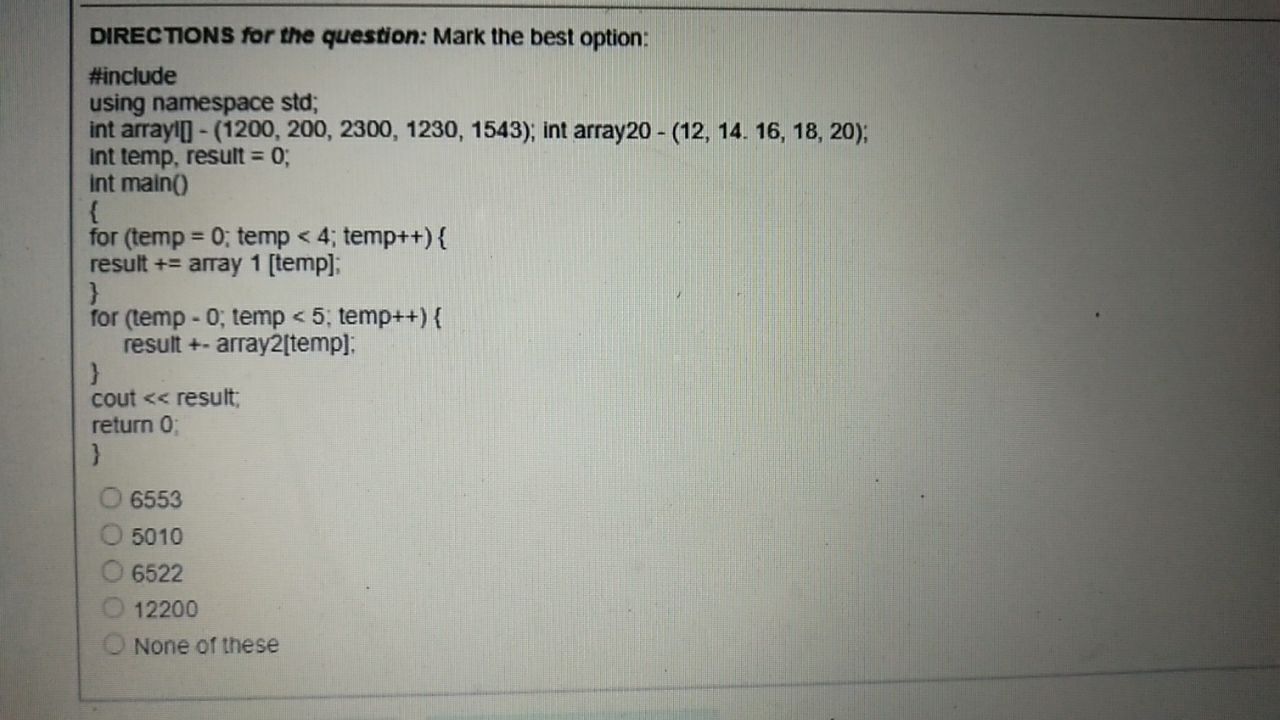
No it will not compile but tell me the logic
 User404
@ammarfaizi2
Ah, I see, you are a man of culture as well.