всем привет, последнее время замечаю, что мои диалоги с hr (посление штук 15) заканчиваются одинаково последние месяца 2, после вопроса об ожидаемой зп. у меня 3 года опыта, я запрашивал суммы от 200 до 280 в зависимости от компании и их вилки, если была указана, это же вроде адекватные суммы? даже ниже рынка
а вы уверены, что из-за денег отказы?
 Максим

 Максим
просто этот вопрос последним звучит всегда, не факт, что раз после последнего вопроса пропали, то значит из-за него, тк он в конце
 Pavel
всем привет, последнее время замечаю, что мои диалоги с hr (посление штук 15) заканчиваются одинаково последние месяца 2, после вопроса об ожидаемой зп. у меня 3 года опыта, я запрашивал суммы от 200 до 280 в зависимости от компании и их вилки, если была указана, это же вроде адекватные суммы? даже ниже рынка
такой же вопрос, только у меня 1 год опыта и вилка 90-150. норм или много прошу?
Pavel
на такое надо всегда отвечать: вы мне тоже! 😛
Вы сможете писать в чат после того, как работодатель пригласит вас
 Андрей
я понимаю, но зачем просить фидбек тогда? Неоптимально)
Ну такое да, у меня обычно время всегда бывало оставалось до конца, быстро справлялся,
собеседующий сам просил задавать вопросы (часто это опять же часть интервью, проверить насколько человеку интересна
компания, работа в ней, процессы, сам проект в конце концов) и я много спрашивал,
начиналась самое интересное для меня 😏 многое удавалось выяснить и увидеть т.н. "красные флаги"
что уже и не очень то я ожидал фидбэка 😁
Pavel
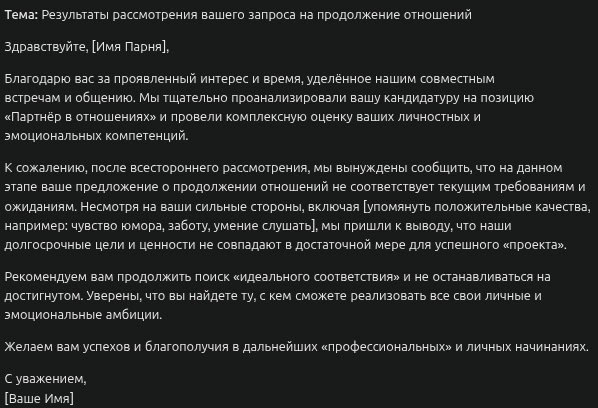
Как бросают своих партнеров девушки-эйчары (основная масса)?
Pavel
Сделайте кто-нибудь бугурт про то как вышел с девушкой, все было круто пока в один момент она не встала, сказала «К сожалению, сейчас я не готова пройти с тобой на следующий этап», ушла и кинула в ЧС во всех соцсетях. И ведь знает что еще больше буду о ней думать из-за такой выходки
 Cook
Ну такое да, у меня обычно время всегда бывало оставалось до конца, быстро справлялся,
собеседующий сам просил задавать вопросы (часто это опять же часть интервью, проверить насколько человеку интересна
компания, работа в ней, процессы, сам проект в конце концов) и я много спрашивал,
начиналась самое интересное для меня 😏 многое удавалось выяснить и увидеть т.н. "красные флаги"
что уже и не очень то я ожидал фидбэка 😁
всегда эти вопросы меня доставали, что вы хотите спросить у нас?
я обычно до собеседования если доходит то и сам уже все узнаю о компании
Андрей
мой последний отказ - Unfortunately, the team has decided to move forward with other applicants at this time. They thought your skillset impressive but felt that others were a closer match to what they are looking for
при этом продолжают искать, вакансия открыта
> They thought your skillset impressive but felt that others were a closer match to what they are looking for
ну не было значит у тебя в резюме X технологии ..
Андрей
всегда эти вопросы меня доставали, что вы хотите спросить у нас?
я обычно до собеседования если доходит то и сам уже все узнаю о компании
ну это часть behaviour интервью, софт скилы твои мельком глянуть
 Rostislav
 Marina
"мы решили продолжить с другим кандидатом"
"мы находимся на стадии тесного общения с другими кандидатами"
 Aleksandr
просто этот вопрос последним звучит всегда, не факт, что раз после последнего вопроса пропали, то значит из-за него, тк он в конце
что значит "последним звучит всегда?" Постоянно на скринингах спрашивают об ожидаемом уровне зарплат
Rostislav
"дело не в тебе дело во мне" == "you are overqualified for this position"
Pavel
а на деле восстановили уволенного в прошлый месяц
(он ничего не делал, постоянно требовал повышение, создал кучу проблем, о которых рассказывают при первой же возможности на собесах)
Marina
"дело не в тебе дело во мне" == "you are overqualified for this position"
"мы сделали запрос на прошлое место работы и получили негативный фидбек"
Pavel
Не существует дружбы между программистом и эйчаром
Pavel
По-любому один из них хочет другого выебать
 vasiliy
Максим
что значит "последним звучит всегда?" Постоянно на скринингах спрашивают об ожидаемом уровне зарплат
ТС говорит
задают вопросы всякие
задают вопрос об ожиданиях
... пропадают
у него вывод, что он запросил не так, я указал на ложный вывод
тк запрос ожиданий идет последним после всего интервью, обрабатывается отдельно целиком и нельзя утверждать, что отказ из-за зп, да даже бы если сразу бы отвечали, тоже могло быть не из-за этого... в силу этапа, который длится до последнего вопроса по "протоколу"
Pavel
голанг джобсго пишет кавер на песню, предлагаю эту либо одну из песен Доры
Pavel
 Azret
Azret
Надеюсь, такое можно делать в этом чате.
 Dmitry
Можно просто освоить трейдинг. Только не этот криптонаебаловский, а форекс и акции
Согласен.
Но вот дата сайентисты в финсекторе думаю будет неплохо востребованы в будущем,особенно сейчас
 llzy
 Pavel
Я начну (продолжающим желательно соблюдать количество слогов):
Мне больше не нужны эти фальшивые джобы
Которым нужен сеньор за $500
Мне не нужны мега тупые стратапы, в которых просят сделать все и сейчас.
Dmitry
Согласен.
Но вот дата сайентисты в финсекторе думаю будет неплохо востребованы в будущем,особенно сейчас
А еще кто как думает?
Стоит развиваться в этой нише?
Aleksandr
А еще кто как думает?
Стоит развиваться в этой нише?
стоит развиваться в той нише которая тебе нравится, в которой ты будешь в будущем профессионалом и экспертом
Dmitry
Pavel
А еще кто как думает?
Стоит развиваться в этой нише?
Да норм
https://habr.com/ru/companies/okama/articles/798007/
Андрей
Согласен.
Но вот дата сайентисты в финсекторе думаю будет неплохо востребованы в будущем,особенно сейчас
чё они делают? это же вроде не разрывно связано с машинным обучением, прогнозированием и т.п.
типа в цифрах есть всякая интересная для компании инфа, надо только её найти где она там прячется ?
Dmitry
чё они делают? это же вроде не разрывно связано с машинным обучением, прогнозированием и т.п.
типа в цифрах есть всякая интересная для компании инфа, надо только её найти где она там прячется ?
Это перечисленное , много чего еще , не просто же у них рабочий день такой продолжительный .
Сейчас буду на фрилансе нарабатывать кейсы, в будущем в найм
Dmitry
Андрей
Это перечисленное , много чего еще , не просто же у них рабочий день такой продолжительный .
Сейчас буду на фрилансе нарабатывать кейсы, в будущем в найм
Скучно и имхо не перспективно: никто до сих пор не придумал чудо модель, которую обучил на тоннах котировок биржи за прошлые года и сделал верный прогноз и озолотился.
Я бы тогда уже, если такое интересно, скорее в аналитику бы шагал: компаниям и прочим у кого есть средства интересно создавать новый рынок,
спрос и пр. Открывать новые ниши и т.д.
Андрей
Обычно таким занимаются продакт менеджеры и выше.
Андрей
Обычно таким занимаются продакт менеджеры и выше.
ну и это определённого рода исследования не очень прям дата сатнисткие, екселя там обычно хватает,
но кучу времени надо потратить на анализ рынка, конкурентов и пр.
Андрей
а финансы... финансы поют романсы последние года показали что прогнозы вообще ошибочные много где и в чём были,
в том числе по отношению ко многим фиатным валютам
Dmitry
Скучно и имхо не перспективно: никто до сих пор не придумал чудо модель, которую обучил на тоннах котировок биржи за прошлые года и сделал верный прогноз и озолотился.
Я бы тогда уже, если такое интересно, скорее в аналитику бы шагал: компаниям и прочим у кого есть средства интересно создавать новый рынок,
спрос и пр. Открывать новые ниши и т.д.
Сейчас большой спрос на них , на будущее не нагоняю.
Насчет аналитиков , а например финансовых аналитиков скорее заменит нейросеть,лет 5 осталось
Dmitry
 Артём
заводчанином
 Aleksei
Ну в АйТи с нуля сейчас явно не стоит идти
Pavel
Да норм
https://habr.com/ru/companies/okama/articles/798007/
С одной стороны, вряд ли можно найти область, куда приходит больше инвестиций. Поэтому именно в финтехе сосредоточены самые продвинутые технологии: блокчейн, искусственный интеллект, биг дата, ML и др.
При этом всем, IT в целом и финтех в частности очень неэффективно распоряжаются капиталовложениями, из-за того что там господствуют по сути зомби-компании. Об этом писал Dustin Getz:
Zombie firms went parabolic 2019-2022 https://i.imgur.com/LbrbfaP.png
The rising number of so-called zombie firms, defined as firms that are unable to cover debt servicing costs from current profits over an extended period, has attracted increasing attention in both academic and policy circles. Using firm-level data on listed firms in 14 advanced economies, we document a ratcheting-up in the prevalence of zombies since the late 1980s. Our analysis suggests that this increase is linked to reduced financial pressure, which in turn seems to reflect in part the effects of lower interest rates. We further find that zombies weigh on economic performance because they are less productive and because their presence lowers investment in and employment at more productive firms.
— Source: https://www.bis.org/publ/qtrpdf/r_qt1809g.pdf (2018)
We are now seeing second and third order effects of this, including the starvation of excellent technologies like Clojure as all the oxygen in the room has been sucked into the capital bonfire, leaving us now with a trail of 26 year old tech managers making technology decisions off of a playbook that's 10 years old. Did you know React.js is older now than jQuery was when React came out? Technology decisions are not made by analysis, but by "influencers"; resulting in phenomena like the entire "Modern Data Stack" market being a grift.
How do I know this? Because the company I founded, Hyperfiddle — which is successfully (!) producing a generation shift technology Electric Clojure, not through elite relationships, but rather through technical excellence, a world-class engineering team, and sheer force of will — has been capital-starved since inception as javascript alchemist charlatans soak up all available capital with their vapid promises to transmute lead into gold.
Вопрос: is it this, or that clojure is not that much of a value add?
First of all, I upvoted you, because this question is so important.
I want to start by sharpening the question as it is missing the "to whom", i.e. the question is "over-aggregated" (it has smushed together pertinent information that needs to be broken out into buckets). So, who is making the clojure adoption decision, in what cultural context (i.e. what is the playbook for recruiting, interviewing, management, how do they organize the work), and what are the tradeoffs.
Here are some past comments of mine related to this topic that I think you will find agreeable:
- "I find ClojureScript way worse than regular Clojure" ... "Javascript does it better here"
- "I think Clojure is growing in Europe and LatAm; USA tech selection is wildly distorted by big tech and the bubble"
- "clojure wants you to stop and think, ... does your work cultural context allow and align with this?"
- "Clojure never reached a critical mass of corporate backing like Python"
- "malinvestment tilts the scales against innovation"
I've run out of time but hopefully you can piece together what is happening. "Easy times make for weak men." Financial loosening causes unnatural growth where companies take whatever they were already doing and do more, and the obvious way to do that is to double your headcount as fast as you can (chart), which means (a) you need to automate your hiring process (leetcode; filter resumes by past employer) and (b) admit less skilled workers broadly, (c) promote underdeveloped managers to manage all this new headcount. Which results in: day in the life as a 23 year old product manager at Meta.
Conclusion: [...]
Pavel
С одной стороны, вряд ли можно найти область, куда приходит больше инвестиций. Поэтому именно в финтехе сосредоточены самые продвинутые технологии: блокчейн, искусственный интеллект, биг дата, ML и др.
При этом всем, IT в целом и финтех в частности очень неэффективно распоряжаются капиталовложениями, из-за того что там господствуют по сути зомби-компании. Об этом писал Dustin Getz:
Zombie firms went parabolic 2019-2022 https://i.imgur.com/LbrbfaP.png
The rising number of so-called zombie firms, defined as firms that are unable to cover debt servicing costs from current profits over an extended period, has attracted increasing attention in both academic and policy circles. Using firm-level data on listed firms in 14 advanced economies, we document a ratcheting-up in the prevalence of zombies since the late 1980s. Our analysis suggests that this increase is linked to reduced financial pressure, which in turn seems to reflect in part the effects of lower interest rates. We further find that zombies weigh on economic performance because they are less productive and because their presence lowers investment in and employment at more productive firms.
— Source: https://www.bis.org/publ/qtrpdf/r_qt1809g.pdf (2018)
We are now seeing second and third order effects of this, including the starvation of excellent technologies like Clojure as all the oxygen in the room has been sucked into the capital bonfire, leaving us now with a trail of 26 year old tech managers making technology decisions off of a playbook that's 10 years old. Did you know React.js is older now than jQuery was when React came out? Technology decisions are not made by analysis, but by "influencers"; resulting in phenomena like the entire "Modern Data Stack" market being a grift.
How do I know this? Because the company I founded, Hyperfiddle — which is successfully (!) producing a generation shift technology Electric Clojure, not through elite relationships, but rather through technical excellence, a world-class engineering team, and sheer force of will — has been capital-starved since inception as javascript alchemist charlatans soak up all available capital with their vapid promises to transmute lead into gold.
Вопрос: is it this, or that clojure is not that much of a value add?
First of all, I upvoted you, because this question is so important.
I want to start by sharpening the question as it is missing the "to whom", i.e. the question is "over-aggregated" (it has smushed together pertinent information that needs to be broken out into buckets). So, who is making the clojure adoption decision, in what cultural context (i.e. what is the playbook for recruiting, interviewing, management, how do they organize the work), and what are the tradeoffs.
Here are some past comments of mine related to this topic that I think you will find agreeable:
- "I find ClojureScript way worse than regular Clojure" ... "Javascript does it better here"
- "I think Clojure is growing in Europe and LatAm; USA tech selection is wildly distorted by big tech and the bubble"
- "clojure wants you to stop and think, ... does your work cultural context allow and align with this?"
- "Clojure never reached a critical mass of corporate backing like Python"
- "malinvestment tilts the scales against innovation"
I've run out of time but hopefully you can piece together what is happening. "Easy times make for weak men." Financial loosening causes unnatural growth where companies take whatever they were already doing and do more, and the obvious way to do that is to double your headcount as fast as you can (chart), which means (a) you need to automate your hiring process (leetcode; filter resumes by past employer) and (b) admit less skilled workers broadly, (c) promote underdeveloped managers to manage all this new headcount. Which results in: day in the life as a 23 year old product manager at Meta.
Conclusion: [...]
Conclusion: You're right! Clojure does not help organizations running a playbook built around scaling headcount. Which is every public company and every VC backed startup and virtually all of the USA. Which the mean-regression force causing USA tech to be mediocre / turn to shit.
And as you say: the clojure community not actually solved web development, the way Java solved server development in 1995. The results aren't there yet, just the potential. Potential requires investment to actualize.
Pavel
С одной стороны, вряд ли можно найти область, куда приходит больше инвестиций. Поэтому именно в финтехе сосредоточены самые продвинутые технологии: блокчейн, искусственный интеллект, биг дата, ML и др.
При этом всем, IT в целом и финтех в частности очень неэффективно распоряжаются капиталовложениями, из-за того что там господствуют по сути зомби-компании. Об этом писал Dustin Getz:
Zombie firms went parabolic 2019-2022 https://i.imgur.com/LbrbfaP.png
The rising number of so-called zombie firms, defined as firms that are unable to cover debt servicing costs from current profits over an extended period, has attracted increasing attention in both academic and policy circles. Using firm-level data on listed firms in 14 advanced economies, we document a ratcheting-up in the prevalence of zombies since the late 1980s. Our analysis suggests that this increase is linked to reduced financial pressure, which in turn seems to reflect in part the effects of lower interest rates. We further find that zombies weigh on economic performance because they are less productive and because their presence lowers investment in and employment at more productive firms.
— Source: https://www.bis.org/publ/qtrpdf/r_qt1809g.pdf (2018)
We are now seeing second and third order effects of this, including the starvation of excellent technologies like Clojure as all the oxygen in the room has been sucked into the capital bonfire, leaving us now with a trail of 26 year old tech managers making technology decisions off of a playbook that's 10 years old. Did you know React.js is older now than jQuery was when React came out? Technology decisions are not made by analysis, but by "influencers"; resulting in phenomena like the entire "Modern Data Stack" market being a grift.
How do I know this? Because the company I founded, Hyperfiddle — which is successfully (!) producing a generation shift technology Electric Clojure, not through elite relationships, but rather through technical excellence, a world-class engineering team, and sheer force of will — has been capital-starved since inception as javascript alchemist charlatans soak up all available capital with their vapid promises to transmute lead into gold.
Вопрос: is it this, or that clojure is not that much of a value add?
First of all, I upvoted you, because this question is so important.
I want to start by sharpening the question as it is missing the "to whom", i.e. the question is "over-aggregated" (it has smushed together pertinent information that needs to be broken out into buckets). So, who is making the clojure adoption decision, in what cultural context (i.e. what is the playbook for recruiting, interviewing, management, how do they organize the work), and what are the tradeoffs.
Here are some past comments of mine related to this topic that I think you will find agreeable:
- "I find ClojureScript way worse than regular Clojure" ... "Javascript does it better here"
- "I think Clojure is growing in Europe and LatAm; USA tech selection is wildly distorted by big tech and the bubble"
- "clojure wants you to stop and think, ... does your work cultural context allow and align with this?"
- "Clojure never reached a critical mass of corporate backing like Python"
- "malinvestment tilts the scales against innovation"
I've run out of time but hopefully you can piece together what is happening. "Easy times make for weak men." Financial loosening causes unnatural growth where companies take whatever they were already doing and do more, and the obvious way to do that is to double your headcount as fast as you can (chart), which means (a) you need to automate your hiring process (leetcode; filter resumes by past employer) and (b) admit less skilled workers broadly, (c) promote underdeveloped managers to manage all this new headcount. Which results in: day in the life as a 23 year old product manager at Meta.
Conclusion: [...]
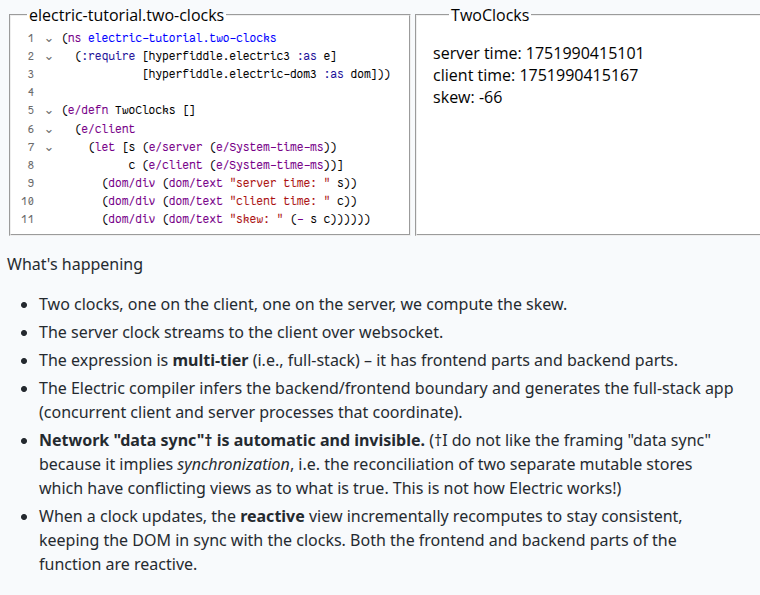
Для контекста, этот человек основатель вот этой штуки, по сути убирает необходимость во всяких фреймворках типа React/Vue/etc., убирает необходимость вообще вызывать методы HTTP запросов на клиентах, полностью. Разраб нигде не определяет вообще как делаются запросы на сервер. Также разраб просто пишет конкретно что с бэка ему нужно напрямую. Ну в общем посмотрите и надеюсь поймете. В любом случае, важно именно что он говорит о состоянии IT
 yosakohf
Сейчас большой спрос на них , на будущее не нагоняю.
Насчет аналитиков , а например финансовых аналитиков скорее заменит нейросеть,лет 5 осталось
Тогда тебе скорее в hft, но там надо быть прямо задротом
Dmitry
Тогда тебе скорее в hft, но там надо быть прямо задротом
Ага,но риск большой,чтобы в постоянной перспективе
Nurulla
Ну в АйТи с нуля сейчас явно не стоит идти
Почему? Разве кризис не конечен, или еще далеко до кризиса
Eugene
Скучно и имхо не перспективно: никто до сих пор не придумал чудо модель, которую обучил на тоннах котировок биржи за прошлые года и сделал верный прогноз и озолотился.
Я бы тогда уже, если такое интересно, скорее в аналитику бы шагал: компаниям и прочим у кого есть средства интересно создавать новый рынок,
спрос и пр. Открывать новые ниши и т.д.
есть такое, просто не для всех. вот например https://softvision.ai/home- работают уже 7 лет, я знаю основателей, знаю всю историю и это точно не скам (никому ничего активно не предлагают, работали долгое время для своих, недавно открыли фонд для более широкой публики, но порог входа $100k - https://phat.fund/home)
Pavel
 Azret
 Дима
Дима
И спине 😁😁😁
Dmitry
Сложно ли было трудоустраиваться,кто по найму в Москве работает?
 Evgeni
Azret
Ребят, если кто знает ещё годные группы/каналы, где публикуют вакансии по гошке, плиз скиньте в личку.🙏
 никита
Для контекста, этот человек основатель вот этой штуки, по сути убирает необходимость во всяких фреймворках типа React/Vue/etc., убирает необходимость вообще вызывать методы HTTP запросов на клиентах, полностью. Разраб нигде не определяет вообще как делаются запросы на сервер. Также разраб просто пишет конкретно что с бэка ему нужно напрямую. Ну в общем посмотрите и надеюсь поймете. В любом случае, важно именно что он говорит о состоянии IT
а можешь чуть больше рассказать про «эту штуку»? на неделе возможности самому поизучать, потыкать нет, хотелось бы вкратце услышать в чем ее плюсы и минусы
Azret
Кстати кто нибудь может помочь аккаунт на linkedin создать? Даже через vpn не помогает (
Присоединяюсь к вопросу Сергея.
Пару месяцев назад пробовал зарегистрировать в linkedIn. Посмотрел свежие видосы на ютубе по этой теме. Варианты с VPN (регион Европа) и с мобильного телефона - результата нет.
Может, кто-то из местных регался там? Как вы это сделали? Поделитесь рабочим способом.🙏
 Artem
Присоединяюсь к вопросу Сергея.
Пару месяцев назад пробовал зарегистрировать в linkedIn. Посмотрел свежие видосы на ютубе по этой теме. Варианты с VPN (регион Европа) и с мобильного телефона - результата нет.
Может, кто-то из местных регался там? Как вы это сделали? Поделитесь рабочим способом.🙏
на авито услугу можно купить, тебе сделают довольно быстро.
цена вопроса $10.
ps. сам недавно делал, кому интересно могу в личку контакт человека скинуть.
Azret
на авито услугу можно купить, тебе сделают довольно быстро.
цена вопроса $10.
ps. сам недавно делал, кому интересно могу в личку контакт человека скинуть.
Один вопрос. Им для этого требуется вход (логин/пароль) от моей gmail почты?
Artem
нет, только почта. пароль создается временный
Artem
ну и есть несколько опций создания аккаунта (eu, ru).
для eu нужен загран для подтверждения.
Azret
нет, только почта. пароль создается временный
Хм... не хотелось бы давать кому-то доступ к своей почте. Пусть даже временно. ((
Artem
видимо вы не так поняли, на почту создается аккаунт с временным паролем. к примру "parol123".
к вашей почте доступа у исполнителя не будет
Azret
видимо вы не так поняли, на почту создается аккаунт с временным паролем. к примру "parol123".
к вашей почте доступа у исполнителя не будет
А, вы имеете в виду, это пароль от линкедин?
Artem
да.
Azret
Понял. Киньте контакт в личку, плиз.🙏