 Aleksandr


даёшь арену
 Αλεχ
Кстати, идея для хабрастатьи: руководство по деревьям в расте
https://github.com/SimonSapin/rust-forest
Αλεχ
ИСЧХ Sapin по французски это ёлка
 Mikail
указатели - для слабых духом
Ну, например надо мутировать разные куски дерева из разных потоков, и по построению алгоритма алиасинга не будет
Aleksandr
это мне и предстоит в ближайшее время
но имхо лучше избавиться от мутирования в разных потоках
очередь изменений местами лучше
Mikail
Но ведь это же Очень Медленно! Хотя бтв, даже этот кейс не выглядит безнадежным.
Во-первых, можно хранить &UnsafeCell, это безопаснее указателей.
Во-вторых, в некоторых случаях может получиться изолировать ансейф в небольшом куске кода, который наружу ссылочки нормальные отдает
Αλεχ
Но ведь это же Очень Медленно! Хотя бтв, даже этот кейс не выглядит безнадежным.
Во-первых, можно хранить &UnsafeCell, это безопаснее указателей.
Во-вторых, в некоторых случаях может получиться изолировать ансейф в небольшом куске кода, который наружу ссылочки нормальные отдает
в расте нет ничего медленного. Так что надо делать максимально просто
Aleksandr
это не медленно, если результат применения изменений виден лишь в результирующем потоке обработки, кто первый встал и чьи тапки всяко не узреешь
Aleksandr
а вот у мну деревце на 100к узлов - локами объешься иначе
Mikail
это не медленно, если результат применения изменений виден лишь в результирующем потоке обработки, кто первый встал и чьи тапки всяко не узреешь
Нам придется дважды обхожить дерево. А во второй раз - еще и с одного потока
Aleksandr
возможно
от конкретного случая зависит
если граф может целиком измениться от применений - то реально мьютексы начинают морочить мосх
Mikail
Кстати, я придумал сам кейс.
Дан массив и приходят два вида запросов.
1. Над отрезком сотворить чокнутую фигню (например возвести каждый элемент в 5 степень по модулю 1000000007). Таких запросов довольно мало.
2. Найти сумму на отрезке. Таких запросов куча
 Anonymous
Или sqrt decomposition
 jot.rs
В Rust есть чистые функции? Я нагуглила только const fn, которые казалось бы должны только выполняться во время компиляции и никакого отношения к чистоте это не имеет…
Αλεχ
модификатора, который бы запрещал нечистые действия в функциях в расте нет
 Stanislav
В Rust есть чистые функции? Я нагуглила только const fn, которые казалось бы должны только выполняться во время компиляции и никакого отношения к чистоте это не имеет…
Хочется сказать, что когда есть стейт, то там есть в чем путаться.. тем более когда стейт + асинхрон.. А так, я вот даже не знаю, стоит ли так прям гнаться за этой чистотой.. когда ещё речь про раст
Stanislav
Как бы и так все что в функцию передал, фукция к глобальным данным не обратится, их менять не пойдет. Область видимости не та. Может конечно что-то изменить в своем же объекте, но это уже и так неплохое ограничение
Αλεχ
Хочется сказать, что когда есть стейт, то там есть в чем путаться.. тем более когда стейт + асинхрон.. А так, я вот даже не знаю, стоит ли так прям гнаться за этой чистотой.. когда ещё речь про раст
почитай что я на хабре писал. Стейт и чистый бывает
Αλεχ
тогда не дезинформируй))
 Dmytro
 Денис
jot.rs
В любом языке они есть
Ну я имею ввиду есть ли какой-то специальный синтаксис или ещё что-то для выделения чистых функций и заставления програмсита использовать только чистые функцие в чистых функциях
 Hirrolot
(Только сейчас он очень урезанный)
Dmitry
Кидайте линку на код сразу, кто-нибудь отпишется
https://gist.github.com/dimparf/56b8d8d21525edc3564f105bc85f9477
Dmitry
 Ivan
1. Почему строковые константы, а не enum-ы?
2. stop_labels можно сделать HashSet<Label> вместо Vec и вообще засунуть в once_cell. Можно просто слайсом оставить: static STOP_LABELS: &'static [&'static str] = &["availability", ...]
3. rec.value != String::new() && rec.value.len() > 2 -- зачем первое условие, если второе и так проверит, что строка не пустая?
4. subset.iter().for_each(|rec| println!("{}", rec.value)); -- я бы обычный for loop посоветовал.
5. Переменная l в 69 строке -- зачем? Можно же rec.label = "time_detected".to_owned()
Для мелкой утилиты вообще не принципиально + половина это вопрос вкуса.
xxx
/spam
Dmitry
1. Почему строковые константы, а не enum-ы?
2. stop_labels можно сделать HashSet<Label> вместо Vec и вообще засунуть в once_cell. Можно просто слайсом оставить: static STOP_LABELS: &'static [&'static str] = &["availability", ...]
3. rec.value != String::new() && rec.value.len() > 2 -- зачем первое условие, если второе и так проверит, что строка не пустая?
4. subset.iter().for_each(|rec| println!("{}", rec.value)); -- я бы обычный for loop посоветовал.
5. Переменная l в 69 строке -- зачем? Можно же rec.label = "time_detected".to_owned()
Для мелкой утилиты вообще не принципиально + половина это вопрос вкуса.
Спасибо за ревью. 3 действительно логическая ошибка. По остальным пунктам почитаю.
Dmitry
1. Почему строковые константы, а не enum-ы?
2. stop_labels можно сделать HashSet<Label> вместо Vec и вообще засунуть в once_cell. Можно просто слайсом оставить: static STOP_LABELS: &'static [&'static str] = &["availability", ...]
3. rec.value != String::new() && rec.value.len() > 2 -- зачем первое условие, если второе и так проверит, что строка не пустая?
4. subset.iter().for_each(|rec| println!("{}", rec.value)); -- я бы обычный for loop посоветовал.
5. Переменная l в 69 строке -- зачем? Можно же rec.label = "time_detected".to_owned()
Для мелкой утилиты вообще не принципиально + половина это вопрос вкуса.
4. Пришел из Java/Scala мира, там часто используются именно такие конструкции с итераторами/стримами хотя можно и foreach
Mikail
Дерево отрезков
Для запроса второго типа да
А для первого типа надо разложить запрос на фундаментальные вершины и в них обойти все поддерева, потому что массовые операции такого не могут
Anonymous
А нужно?
Mikail
Вариант с ДО отвечает за логарифм
Αλεχ
4. Пришел из Java/Scala мира, там часто используются именно такие конструкции с итераторами/стримами хотя можно и foreach
даже в Java/Scala мире так делать не рекомендуется: https://blogs.msdn.microsoft.com/ericlippert/2009/05/18/foreach-vs-foreach/
Αλεχ
4. Пришел из Java/Scala мира, там часто используются именно такие конструкции с итераторами/стримами хотя можно и foreach
4. println!("Labels {:?}", dataset);
Αλεχ
@dimstream я чутка причесал: https://gist.github.com/Pzixel/a86d1e3eec21345beef31bc7c9f7610b
Αλεχ
вроде выглядит посимпатичнее
Αλεχ
минус анврапы, минус много вложенностей, минус ручная печать массивов, ну и форматирование
Αλεχ
@vlad20012 А чо гоуту по стд не работает? :(
Αλεχ
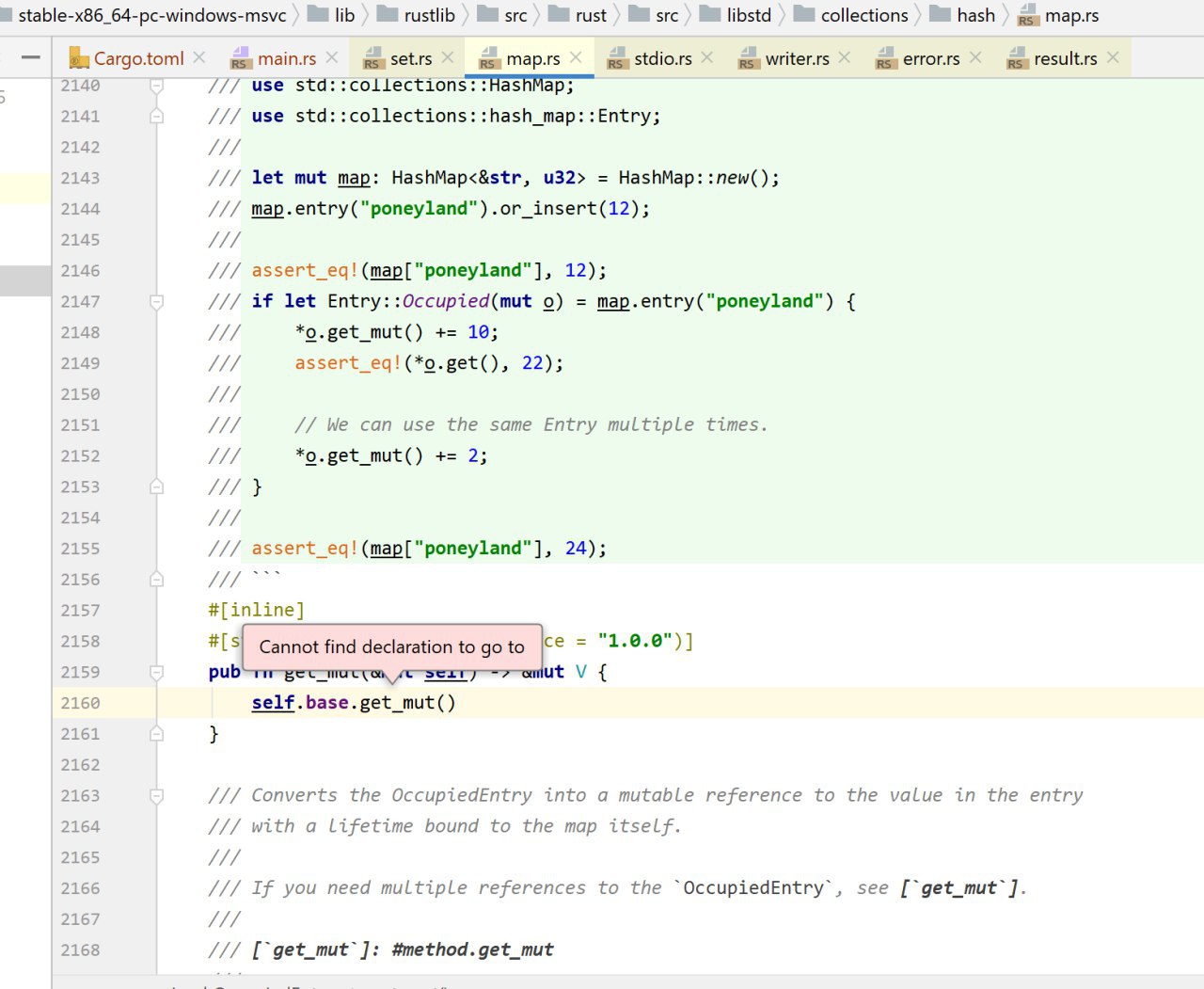
 Vlad
Это про это короч https://github.com/intellij-rust/intellij-rust/pull/3864
Αλεχ
ясно. Тогда ждемс
Αλεχ
бтв если кому-то нужны генерик never-types (ибо ! не может имплементить генерик трейты) то вот моя накостыленная реализация:
pub struct Never<T>(core::marker::PhantomData::<T>, Box<Never<T>>);
impl<T> Iterator for Never<T> {
type Item = T;
fn next(&mut self) -> Option<Self::Item> {
unreachable!()
}
}
pub fn absurd<T, U>(_: Never<T>) -> U {
unreachable!()
}
Mikail
А почему не std::hint::unreachable_unchecked ?
Αλεχ
какая разница? Оно же никогда не выполнится
Αλεχ
вот так всегда) У людей глаза горят оптимизировать, хотя тут прям *очевидна* бесполезность такого занятия))
Mikail
но компилятор-то об этом не знает
Αλεχ
я не понимаю за что ты переживаешь
Αλεχ
расскажи какой кейс это должно улучшить
Mikail
Например, я пишу impl FromStr for String {
type Err = Never<()>;
fn from_str() {...}
}
Дальше в коде пользователя:
let s: String = "".parse().unwrap_or_else(|err|err.absurd())
Mikail
Я хочу, чтобы компилятор, с учетом non-null option optimization, просто сделал условно говоря
let s = transmute ("".parse())
Но он не догадается, что Err вариант можно игнорировать. Он же не знает, что он не населен
Dmitry
Αλεχ
Я хочу, чтобы компилятор, с учетом non-null option optimization, просто сделал условно говоря
let s = transmute ("".parse())
Но он не догадается, что Err вариант можно игнорировать. Он же не знает, что он не населен
может догадается, а может и нет. Я не думаю что из-за unreach_unchecked он догадается
Αλεχ
ну мб ты прав
Mikail
может догадается, а может и нет. Я не думаю что из-за unreach_unchecked он догадается
Должен догадаться. Оптимизатор увидит, что обработка Err-ветки триггерит UB, значит ее можно выкинуть.
Dmitry
Αλεχ
Это C# по ссылке 🤣
ну ты ведь знаешь что C# это та же джава, так что смысл тот же. Например в твоем коде:
subset.iter().for_each(|rec| {
wtr.serialize(rec);
});
Тебе компилятор показывает что ты не обрабатываешь ошибку (который ты игнорируешь в своем коде, к слову). Если написать так:
subset.iter().for_each(|rec| {
wtr.serialize(rec)?;
});
То нифига не заработает, потому что форыч не возвращает ошибку. А вот так:
for rec in subset.iter() {
writer.serialize(rec)?;
}
Всё отлично работает.
Поэтому вот это утверждение:
The second reason is that doing so adds zero new representational power to the language. Doing this lets you rewrite this perfectly clear code:
foreach(Foo foo in foos){ statement involving foo; }
into this code:
foos.ForEach((Foo foo)=>{ statement involving foo; });
which uses almost exactly the same characters in slightly different order. And yet the second version is harder to understand, harder to debug, and introduces closure semantics, thereby potentially changing object lifetimes in subtle ways.
Отлично относится и к шарпу, и к джаве, и к скале, и особенно к расту (где вместо эксепшнов резалты)
Αλεχ
Dmitry
C# это та же Java
Dmitry
Пожалуй тогда поговорим о Расте)
Αλεχ
Чтооо?))))
1. во-первых это так
2. во-вторых перечитай утверждение. И к жабе, и к расту на 100% относится
Dmitry
Тем более ошибки можно обрабатывать
Dmitry
1. во-первых это так
2. во-вторых перечитай утверждение. И к жабе, и к расту на 100% относится
По поводу раста ничего не знаю, нет никакого опыта
Αλεχ
Если в foreach что-то упадет и в Scala и в Java я об этом узнаю.
аналогом обработки растовой ошибки в данном случае будет авейт. Как заавейтиться в цикле внутри замыкания - вопрос нетривиальный
Αλεχ
а в форыче - пожалуйста
Dmitry
аналогом обработки растовой ошибки в данном случае будет авейт. Как заавейтиться в цикле внутри замыкания - вопрос нетривиальный
Может просто не надо создавать разделяемых состояний?
Dmitry
Зачем тогда итераторы и for_each на них?))