
 Alignant


 BinaryByter
he's just a crackpot
Alignant
If it sucks on the developer's end
Alignant
It would suck on the user's end
BinaryByter

 Dima
Dima
what the hell
Anonymous
Allright gcc
Dima
calculate my long(s) ( ͡° ͜ʖ ͡°)
Anonymous
libgmp

 Roxifλsz 🇱🇹
Good meme
Alignant
hehehe
if I designed a language, I would make the basic integer type long, and it would increase as you add Os
long < loong looong < ...
BinaryByter
if I designed a language, I would make the basic integer type long, and it would increase as you add Os
long < loong looong < ...
doable with some macro trickery I think
Anonymous
lol
Anonymous
#define loong long long
Anonymous
#define looooooong long long long long long long long long
Alignant
long is 4 bits, loong is 8bits, looing is 16 and so on
Dima
lol I remember someone made the issue @ linux repo noting that “unsigned long long” is a typo, shorten to “unsigned long"
Anonymous
*bytes
Anonymous
Holy shit
Anonymous
joking
Anonymous
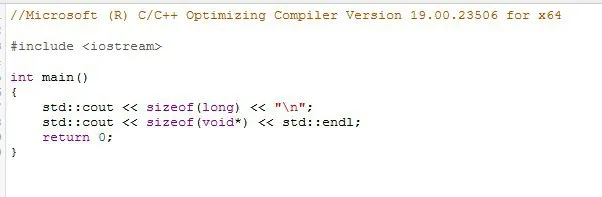
Anyway long is 8 bytes on linux
Anonymous
long long is the same
Anonymous
y
Alignant
But on 64 bit windows it's 4?
Anonymous
Yes
Anonymous
Probably to maintain compatability with older programs
Anonymous
But im not sure
Alignant
 Alignant
 BinaryByter
how long?
BinaryByter
how many words do you need me to put together?
Alignant
As much as you can, as long as it describes the situation I see
BinaryByter
arschgeburtenwichsvorlagenscheissermutter
BinaryByter
it's the mother of the guy who shits out fapping material for people who were born from their mother's ass
Anonymous
BinaryByter
BinaryByter
sizeof (int) >= 1
BinaryByter
sizeof (short) >= 1
BinaryByter
etc
BinaryByter
the architecture doesn't say a lot about datatype sizs
Alignant
the architecture doesn't say a lot about datatype sizs
Architecture supports 3 types of data
Integers, that's obvious
Floats, where we have a tricky way to store it(e.g. IEEE 754)
Flags, where each bit recognized seperetely
And sizes like byte, word, doubleword, etc
Anything else is defined by languages, compilers, blah
BinaryByter
Architecture supports 3 types of data
Integers, that's obvious
Floats, where we have a tricky way to store it(e.g. IEEE 754)
Flags, where each bit recognized seperetely
And sizes like byte, word, doubleword, etc
Anything else is defined by languages, compilers, blah
architecture doesnt support types of datas
BinaryByter
it supports 0 and 1
BinaryByter
the compiler makes sense of it
BinaryByter
I could put an int through the float registers
BinaryByter
nobody would care
Alignant
nobody would care
Well, that's true. But you wouldn't be able to multiply it by the other double
BinaryByter
BinaryByter
there isn't a thing in the float that tells the computer that it cant be multiplied with an int
Alignant
How a processor would know how to multiply it?
Alignant
does it have to know?
Well, there are FMA operations. And they are supported by some processors
Anonymous
Well, there are FMA operations. And they are supported by some processors
Wizard.. wizard :D
Alignant
Does it count as "processor knows"?
BinaryByter
the processor doesn't know a lot
BinaryByter
it just does what it is been told to
BinaryByter
if you make it multiply an int with a float it will
BinaryByter
why woudln't it?
Alignant
Well, we say compiler knows the type... but compiler doesn't know anything lol