how i can know if my online code editor is not showing any syntax error.
Think???
 Anonymous

 Anonymous
If you're unable to think, leave programming, it's not for you
 Dima
Dima
If you're unable to think, leave programming, it's not for you
or go for js and python, lol
 Aman
Aman
bro i was thinking from yesterday
Anonymous
Lmao
Anonymous
or go for js and python, lol
No, they need to think either
Sometimes even harder because of dynamic types
Aman
the question for which i had written the code is that i had to print first non repeating character in a string so for that i had used unordered map to count the frequency of character and for the second loop for which u all had pointed out the error i am checking the frequency of character whether it is equal to 1 or not if it is 1 then it will return the first non repeating charcter from there only
Anonymous
the question for which i had written the code is that i had to print first non repeating character in a string so for that i had used unordered map to count the frequency of character and for the second loop for which u all had pointed out the error i am checking the frequency of character whether it is equal to 1 or not if it is 1 then it will return the first non repeating charcter from there only
if (m[S[i] == 1])
Ok
What this line is doing?
Bipin
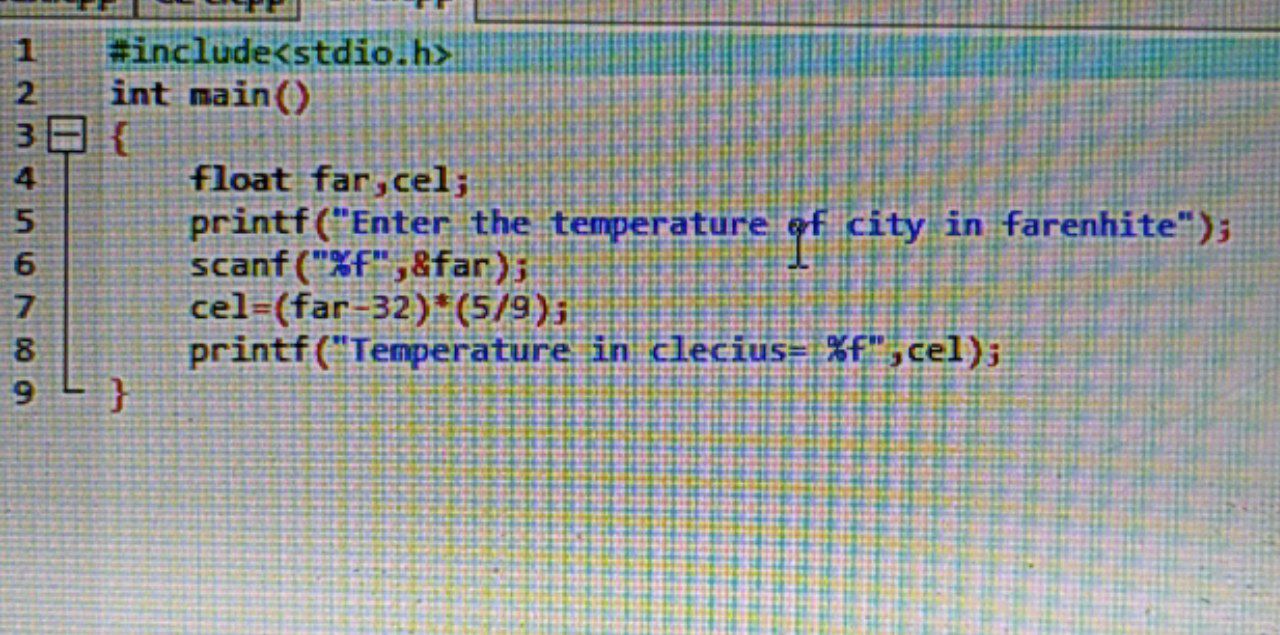
 Alex
Alex
 Vlad
Aman
Aman
Vlad
Aman
Aman
as it is a float variable
Bipin
Thank you 😊
 Anmol
Anmol
how i can know if my online code editor is not showing any syntax error.
Even vscode didn't show any syntax error.
Anmol
Just use brain ffs
Jøhn
Don't write C if you are this dumb, the world has enough memory bugs already
Vlad
Why shouldn't it be?
Vlad
Scanf just treats pointer as integer
Vlad
It doesn't mean that you can access data by that address
Vlad
Implicit conversion from an integer
Vlad
If you were to have warnings enabled you knew
Vlad
*c accesses data
Vlad
Which does not belong to you
Vlad
It's user input after all
Vlad
Have a read about pointers and such
Vlad
Yes. You can output an address, but not the data by that address.
Vlad
Hence it is not an address of a variable created by you
Vlad
It is what is called undefined behavior.
Vlad
Anything could happen really :P
da
Segment error is an exception on linux
Vlad
No accessing data via invalid address
Vlad
*((int*)(0x0)) += 2; // will fail almost everywhere
Vlad
It does not lead to your data. Do you understand?
Nameful
it happens when you try to make an invalid memory operation
Vlad
Also why don't you use "%p" for scanf?
Vlad
int and pointer are different in size
Nameful
why would what work?
Vlad
so what
Vlad
scanf writes into a region of 4 bytes
Vlad
Instead of 8
da
It may also work on Linux. It's not certain
da
😂
Vlad
%d and %x expects int, which is 4 bytes
 V01D
V01D
V01D
V01D
If you need a compiler to know if your syntax is correct, you need to read another book or two.
Anonymous
C is not a safe language. safety is your responsibility.
Anonymous
the *c is undefined behaviour based on whether it points to valid data or not. code that exhibits undefined behaviour is ill-formed.
Anonymous
:/ you don't consider whether it is pointing to anything or not. a program that exhibits undefined behaviour does not need a reason for working good/bad.
Anonymous
idk much details about this. googling - https://stackoverflow.com/questions/22180312/difference-between-undefined-behavior-and-ill-formed-no-diagnostic-message-requ
Anonymous
the question itself was very well written. i just finished reading
V01D
Undefined behaviour can also mean your code runs just fine - it doesn't always mean something unexpected happens
V01D
It seems to work fine on your machine, but not on another - both are due to undefined behaviour.
Vlad
Undefined behaviour can also mean your code runs just fine - it doesn't always mean something unexpected happens
Yeah it's just that it formats your hard drive on each friday 13th
V01D
Rip
Vlad
C standard
Vlad
google "c standard draft"
Vlad
Yes only drafts, but that's all you need
Anonymous
Hye
Anmol
int main() {
int x = 5;
int y = x++ * ++x;
cout << y << '\n';
}
Anmol
is this like undefined behaviour?
Anonymous
if I recall correctly, it is in C++ prior C++17
it should still be undefined behaviour. value computation of x++ and ++x happens before value computation of *. value computation of x++ is sequenced before its side effect. side effect of ++x is sequenced before its value computation.
Anonymous
not enough info to form a well defined sequence @Anmol3299
Anonymous
the result will be different based on whether x++ or ++x's value was computed first. additionally, if x++ was computed first then the result will depend on whether x++'s side effect was completed before ++x's side effect calculation.
 Pavel
Pavel
Oh I see
Pavel
Interesting case
su
the result will be different based on whether x++ or ++x's value was computed first. additionally, if x++ was computed first then the result will depend on whether x++'s side effect was completed before ++x's side effect calculation.
it depends of compiler optimization settings, actually
Anmol
the result will be different based on whether x++ or ++x's value was computed first. additionally, if x++ was computed first then the result will depend on whether x++'s side effect was completed before ++x's side effect calculation.
Yeah. That's pretty obvious. Answer will either be 35 or 36 depending on which operation is done first
Anmol
I actually tried this on compiler explorer on various compilers, it was only icc (intel compiler) which actually gave 36. All other gave 35 as answer
su
it is undefined behaviour
operation precedense not defines order of arguments to be processed? or compiler option does not affect actual values?
Anonymous
I actually tried this on compiler explorer on various compilers, it was only icc (intel compiler) which actually gave 36. All other gave 35 as answer
undefined behaviour -> ill-formed program -> no need to determine why the result is good/bad 🤷
su
I actually tried this on compiler explorer on various compilers, it was only icc (intel compiler) which actually gave 36. All other gave 35 as answer
it depends on optimization techniques, how agressive it is, how calm it is
Anonymous
operation precedense not defines order of arguments to be processed? or compiler option does not affect actual values?
no. order of evaluation is defined by sequence point rules (C) and sequenced before rules (C++). precedence and associativity is used to group operands with operators.
su
undefined behaviour -> ill-formed program -> no need to determine why the result is good/bad 🤷
i think you are totally wrong, cause such a silly example can be found in 1984, or you think you are the only smart person in the universe?
Anmol
undefined behaviour -> ill-formed program -> no need to determine why the result is good/bad 🤷
I was just trying to check how various other compilers try to do this lol