 Anonymous


could you show me a quote that says so
Anonymous
in fact i am right. look at section 11.4 paragraphs 1, 3, and 4
Anonymous
paragraph 1
Members of a class are data members, member functions (11.4.1), nested types, enumerators, and member templates (13.7.2) and specializations thereof.
paragraph 3
A member function is a member that is a function.
paragraph 4
A data member or member function may be declared static in its member-declaration, in which case it is a static member (see 11.4.8) (a static data member (11.4.8.2) or static member function (11.4.8.1), respectively) of the class. Any other data member or member function is a non-static member (a non-static data member or non-static member function (11.4.2), respectively).
Anonymous
it is at 13.9.1 paragraph 3
Anonymous
no i meant the quote you mentioned. it is at 13.9.1 paragraph 3 of the C++20 standard
Anonymous
btw 3.22 3.23 and 3.24 of the C++17 standard are all definitions of the word "signature"
Anonymous
paragraph 1
Members of a class are data members, member functions (11.4.1), nested types, enumerators, and member templates (13.7.2) and specializations thereof.
paragraph 3
A member function is a member that is a function.
paragraph 4
A data member or member function may be declared static in its member-declaration, in which case it is a static member (see 11.4.8) (a static data member (11.4.8.2) or static member function (11.4.8.1), respectively) of the class. Any other data member or member function is a non-static member (a non-static data member or non-static member function (11.4.2), respectively).
and the parts i mentioned here still exist at 12.2 (same paragraph numbers)
Anonymous
Anonymous
Anonymous
 M0HAMMED M0SA
/get cbook
Anonymous
it doesn't have to be.
1) that is the definition of the word signature in the context of class member functions. it is not the definition of a class member function, that is provided by the previously mentioned sections. i interpret it as signature of X::fn()
class X {
static void fn();
}
<class member function> fn (name), empty/void (parameter-type list), X (class of which the function is a member), none (cv-qualifiers), none (ref-qualifiers), none (trailing requires clause)
2) there is no mention of signature of static member functions separately
3) there is no mention of signature of even normal static functions, do we interpret that as static functions don't have a signature? i would much rather take [defns.signature] because it is perfectly applicable to static functions
static func(int a); has the signature
<function> func (name), int a (parameter type list), global namespace (surrounding namespace)
Anonymous
i would say [defns.signature.member] implies that the word static is irrelevant in determining the signature of a class member function
Anonymous
not that class member functions are non-static by default
Anonymous
;-; C++17 or 20? use the tags pls
Anonymous
okay
 Ajay
Ajay
Why to use this- vector<int> *a = new vector<int>() when vector<int> a should be enough?
Anonymous
yes i found it
Anonymous
Why to use this- vector<int> *a = new vector<int>() when vector<int> a should be enough?
you should never use that in modern C++
Anonymous
the section says it describes the organisation of clause 17 through clause 32 and Annex D. 16.4.2 (in C++20)
i went into one of the chapters
you can clearly see that member functions include static member functions too, for example
20.10.3.2 Member functions [pointer.traits.functions]
static pointer pointer_traits::pointer_to(see below r);
static constexpr pointer pointer_traits<T*>::pointer_to(see below r) noexcept;
Anonymous
i see no reason to believe that.
1) i have already provided my interpretation of the definition of the word signature (both for class member functions and ordinary functions) which show no sign of contradiction.
2) 11.4.1 is called "Class members", which i believe can be rewritten as "Members of a class" which leads to the paragraphs mentioned before leaving no distinction between member functions and class member functions.
3) as i said, 16.4.1.4 describes how the rest of the library clauses are organised. if static members are part of "Member function" and not part of "Class member function", and they are clearly mentioned in the detailed library clauses, why are they not mentioned separately in 16.4.1.4. i already provided an example for that.
here is another example
template<class Promise>
struct coroutine_handle : coroutine_handle<>
{
// 17.12.3.1, construct/reset
using coroutine_handle<>::coroutine_handle;
static coroutine_handle from_promise(Promise&);
coroutine_handle& operator=(nullptr_t) noexcept;
// 17.12.3.2, export/import
static constexpr coroutine_handle from_address(void* addr);
// 17.12.3.5, promise access
Promise& promise() const;
};
}
in 17.12.3 [coroutine.handle]
Anonymous
clearly this is not true
Anonymous
24.6.1.2 Class template empty_view [range.empty.view]
namespace std::ranges {
template<class T>
requires is_object_v<T>
class empty_view : public view_interface<empty_view<T>> {
public:
static constexpr T* begin() noexcept { return nullptr; }
static constexpr T* end() noexcept { return nullptr; }
static constexpr T* data() noexcept { return nullptr; }
static constexpr size_t size() noexcept { return 0; }
static constexpr bool empty() noexcept { return true; }
};
}
here is another, the static functions are clearly observers
 Dima
Anonymous
Dima
Anonymous
1) why is it wrong?
yes i did (function). can you provide an alternative signature for static functions? in fact can you provide an alternative signature for static member functions?
2) paragraph 1 of Class Members
"The member-specification in a class definition declares the full set of members of the class". clearly Class Members and Members of the class can be used interchangably.
3)
(2.1) — constructor(s) and destructor
(2.2) — copying, moving & assignment functions
(2.3) — comparison functions
(2.4) — modifier functions
(2.5) — observer functions
(2.6) — operators and other non-member functions
this is the order in which the descriptions of class member functions in the library clauses are organised, obviously the library clauses themselves are relevant
Anonymous
okay
Anonymous
1. you didn't provide a signature. for example, i did
static func(int a);
<function> func (name), int a (parameter type list), global namespace (surrounding namespace)
class X {
static void fn();
}
<class member function> fn (name), empty/void (parameter-type list), X (class of which the function is a member), none (cv-qualifiers), none (ref-qualifiers), none (trailing requires clause)
this is based on my interpretation that function refers to both static and non-static function and class member function refers to both static and non-static member function. if you decide that at least the second one is not true, there is no way for you to provide a signature for static member functions. this alone is a contradiction i believe.
2. i'm arguing that Class Members and Members of a class are same, members are either data members or function members. so Class member function and member function are indistinguishable.
3. this is how class member functions are organised. my argument is that static member functions are part of class member functions, so they don't need separate mention. this proves my point further
i went ahead and checked [coroutine.handle], since the constructors, export/import etc are explicitly commented there. 17.12.3.1 Construct/reset [coroutine.handle.con], 17.12.3.2 Export/import [coroutine.handle.export.import]. doesn't mention static functions separately
i believe you are talking about 20.10.9.2 Static member functions [allocator.traits.members], but that library clause doesn't even have any other types of functions for me to verify that constructor/copy/comparison/modifier/observer etc are separate.
Anonymous
You still discuss the topic about instantiation of static non-template member functions of class templates?
Anonymous
You still discuss the topic about instantiation of static non-template member functions of class templates?
no, discussion is whether the phrases "class member function" and "member function" are the same thing as per the standard
Anonymous
I don't think that every smart pointes makes sense
I mean there is no reasonable issue to store a vector in std::unique_ptr I can think of
Shared and weak pointer could be used to store a vector for some cases, but these smart pointers have very limited use cases in C++
Anonymous
Between different processes?
Anonymous
Ok, you should be right
I have no skills in interprocess programming
🐉
 🐉
🐉
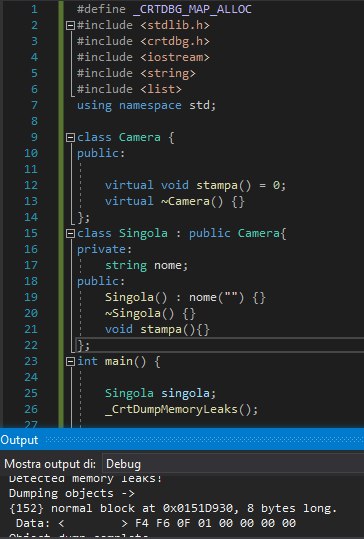
How am I having a memory leak here?
🐉
95% sure that it's string related but don't understand how and why
Anonymous
"Mentions adding a static before a member function makes it a static member function. And the second quote excludes cv and reference qualifiers. This clearly forces the signature of a static member function."
clearly, you want to modify the signature of a "member function" to create the signature of a "static member function". what is the signature of a "member function" then? given that you don't believe "member function" and "class member function" are the same.
cppreference is a wiki. wikis can have mistakes. further, i believe the redirect exists simply because the static member function section of the wiki is extremely small. also, even that redirection text uses the terms "class member function" and "member function" interchangeably
3) i agree about modifier and observer function parts. i was the one who mentioned that static functions are observers in empty_view, it was not specified in the standard.
i think that section is defective. "Descriptions of class member functions follow the order (as appropriate):" clearly most of the sections don't follow the style they mention. further
(2.6) — operators and other non-member functions
"description of class member functions" should definitely not contain "other non-member functions"
Anonymous
95% sure that it's string related but don't understand how and why
the string even doesn't allocate memory in this case because of small string optimization
🐉
btw, is it correct to put _CrtDumpMemoryLeaks(); at the end of the main? I'm experimenting with pointers and destructor while working on list so I have to be 100% sure that it's called at the end
Anonymous
 OFFICIAL BUSYADMIN1💯
Please am sorry
Am new in the group how can I catch up
Anonymous
Like this Detected memory leaks!
Dumping objects ->
c:\users\username\documents\projects\leaktest\leaktest.cpp(20) : {18}
normal block at 0x00780E80, 64 bytes long.
Data: < > CD CD CD CD CD CD CD CD CD CD CD CD CD CD CD CD
Object dump complete.
🐉
Anonymous
I thought the group was fr teaching
You just ask what you do not understand in C/C++, we answer
🐉
 🐉
🐉
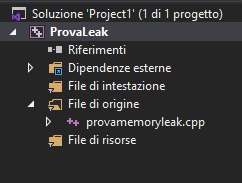
I'm literally right clicking on the top and compiling
Anonymous
So what?
Ajay
I want to assign a vector to another vector but not copy but instead move.
vector<int> a;
//inserting some elements into a
vector<int> b;
//inserting some elements into b
will this work to rather assign b to a : b = a;
Anonymous
Anonymous
I want to assign a vector to another vector but not copy but instead move.
vector<int> a;
//inserting some elements into a
vector<int> b;
//inserting some elements into b
will this work to rather assign b to a : b = a;
std::vector<int> a{1, 2, 3};
std::vector<int> b{std::move(a)};
b.push_back(4);
b.size(); // 4
a.size(); // 0
Ajay
vector<int> a;
//inserting some elements into a
And does vector<int> b = a; perform something else?
Anonymous
vector<int> a;
//inserting some elements into a
And does vector<int> b = a; perform something else?
It copies all the elements of a to b
Anonymous
1. signature and definition are not the same thing
[Note 1 to entry: Signatures are used as a basis for name mangling and linking. — end note]
if it was, there would be no need to have the definitions for the word signature separately
2. this is a bruh level comment. please read beyond sentence 2 (i added sentence 4 later)
cppreference is a wiki. wikis can have mistakes. further, i believe the redirect exists simply because the static member function section of the wiki is extremely small. also, even that redirection text uses the terms "class member function" and "member function" interchangeably
3. i said that about empty_view only. i gave multiple examples.
sure, but i guess the wording of "Descriptions of class member functions follow the order (as appropriate):" should be more like "Descriptions of class member functions and non-member functions follow the order (as appropriate):"
Ajay
std::vector<int> a{1, 2, 3};
std::vector<int> b{std::move(a)};
b.push_back(4);
b.size(); // 4
a.size(); // 0
Ok so a gets assigned to NULL after doing std::move()? I guess, this is inner implementation to prevent the vector a from getting into invalid state.
Anonymous
Ok so a gets assigned to NULL after doing std::move()? I guess, this is inner implementation to prevent the vector a from getting into invalid state.
Nothing is assigned to NULL, where do you even see pointers there?
Ajay
Can you link to somewhere which explains whether it copies or moves? I forget these.
Anonymous
Can you link to somewhere which explains whether it copies or moves? I forget these.
Effective Modern C++ book
Anonymous
Move semantics
Anonymous
it is not called like that in the book probably
Anonymous
I don;t remember now
Ajay
sure I'll check that
Ajay
Nothing is assigned to NULL, where do you even see pointers there?
I think I read somewhere that after some variable gets moved like c = move(d), then d gets into some invalid state. Although, I'm not sure. tho.
Anonymous
Ok so a gets assigned to NULL after doing std::move()? I guess, this is inner implementation to prevent the vector a from getting into invalid state.
All standard classes guarantee to leave object with a valid state after move operation, not std::move
It's done for being able to call destructors on objects which "data" were moved from
Anonymous
All standard classes guarantee to leave object with a valid state after move operation, not std::move
It's done for being able to call destructors on objects which "data" were moved from
Move operation is move constructor or move assignment operator, for example
Ajay
Don't the above 2 statements contradict, he said that since a is a vector, it will be left to some valid state. You said a will be left in some invalid state. Or did I miss something?
OFFICIAL BUSYADMIN1💯
You just ask what you do not understand in C/C++, we answer
Ok
Am sorry
I wanted to learn I don't knw anything about it
Anonymous
Don't the above 2 statements contradict, he said that since a is a vector, it will be left to some valid state. You said a will be left in some invalid state. Or did I miss something?
I'm not as smart as Mα∂ɦµ
Probably what (s)he saying is true
Ajay
All standard classes guarantee to leave object with a valid state after move operation, not std::move
It's done for being able to call destructors on objects which "data" were moved from
So, after std::move on vector a, can't i do a.push_back(element) as she said that I can't perform any operation on it?
Ajay
ok, got that.
Anonymous
1)
i) the Appendix A (grammar summary) doesn't mention the word signature once.
ii) the signature definitions for function and class member function don't include the return type. if that doesn't separate them from grammar, idk what will
2) sure i will. editing an entire page will be a huge task. but i will try.
3) the only contradiction i had was when i misquoted the standard. i accepted that immediately. you just hand waved the fact that you cannot produce the function signature based on your definition.
Anonymous
> This is the stupidest comment I have seen in this group given how many of them I have come across here.
Really?