 Erdem
Erdem


(:
 Emir
Emir
Is there a any difference between these codes? (as fast)
Player a;
a.isim = “emir”;
———————————
Player * a = new Player();
a->isim = “emir”;
delete Player;
————————————
I think first code faster than second, because it allocated in stack memory, is it true?
Emir
that’s not an important point
 Anonymous
Hello
I am in need of help
I am trying to configure an reed switch sensor for the esp32.
I have problem by initialising and by configuring it!
Thanks!
 Francisco
Is there a any difference between these codes? (as fast)
Player a;
a.isim = “emir”;
———————————
Player * a = new Player();
a->isim = “emir”;
delete Player;
————————————
I think first code faster than second, because it allocated in stack memory, is it true?
It's true, but the second code is not limited to the stack, so you can allocate as many as you want, as long as you have memory left
Emir
It's true, but the second code is not limited to the stack, so you can allocate as many as you want, as long as you have memory left
So if i want to write a fast program, i should use a stack memory all the time
Francisco
So if i want to write a fast program, i should use a stack memory all the time
That's what developers in embeded systems tend to do. Memory allocations are expensive, but they provide a lot of flexibility
Emir
Thanks a lot both of you
Anonymous
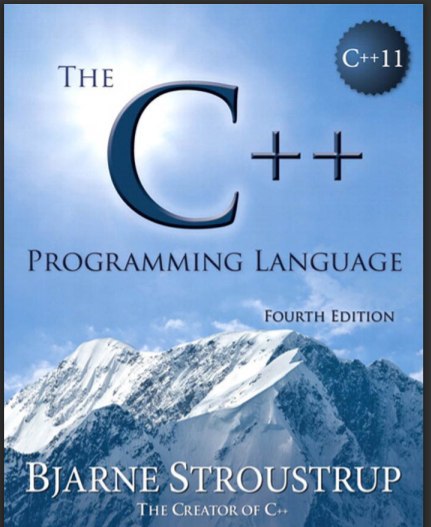
I am moving from c language to learning c++ so which book should I consider?
Anonymous
Ok tq I will give it a look 👍
 zaman
zaman
i think he is not a beginner, he already complete c language .
Anonymous
Hello Members,
I have started learning basics of C programming language.
I'm using K&R C programming language book and using the Dev C++ compiler on Windows.
Which library should I use to create socket and perform a simple server/client exercise?
I could not find any resource written for Dev C++ compiler.
 Renan
Renan
Hello Members,
I have started learning basics of C programming language.
I'm using K&R C programming language book and using the Dev C++ compiler on Windows.
Which library should I use to create socket and perform a simple server/client exercise?
I could not find any resource written for Dev C++ compiler.
Dev C++ is not a compiler, it is an IDE. It uses GCC as compiler, as far as I know.
Anonymous
Dev C++ is not a compiler, it is an IDE. It uses GCC as compiler, as far as I know.
So, Unix socket programming stuffs would work?
I found some resources for Unix socket programming. I just don't have any Linux distro with me. So, I was confused what to do.
Nameful
Anonymous
Install Linux 👍
I love Linux. 😌 At the present moment it's not convenient for me to do so. So, have to use either Dev C++ or Tiny C compiler.
zaman
ohh...ok
zaman
thanks for your kind information.
Nameful
/report
Anonymous
/report
 Dima
Dima
what
Dima
I see
Anonymous
Thank you. I will take a look into that.
Anonymous
Any Brazilian around here?
zaman
now i learn data structure and algorithm.
so, i need a favour for your guys.
has any groups you guys know that there are seriously discuses data structure and algorithm, like this group.
please let me add.
zaman
thx
~~~~~~
/report
Anonymous
Hi guys, I'm doing an exercise that requires me to create two random access files. I've created them, and filled them with empty data, but when I try to read a line to see I everything is all right, I see that "fread" function doesn't read anything. Here is the code; I'm a newbie, so be aware that there could be some horrors lines ;) here is the code https://pad.riseup.net/p/freadDoesntRead-tmp
Anonymous
char msg[100] = "world"
char *p = "hello";
sprintf(msg, "%s %s", p, strdup(msg));
Since nothing is pointing to the duplicated string produced by strdup, is the memory freed automatically?
Renan
char msg[100] = "world"
char *p = "hello";
sprintf(msg, "%s %s", p, strdup(msg));
Since nothing is pointing to the duplicated string produced by strdup, is the memory freed automatically?
I think in C nothing is freed automatically. Correct me if I am wrong. 😅 👍
Anonymous
thanks, like I said, I'm still learning. Honestly it's not clear to me this offset thing
Renan
OK. Thanks. 👍
Anonymous
even if I use fseek to start from the beginning It doesn't change
Anonymous
Thanks, that was helpful.
Anonymous
ah, Ok, thanks, now I've understood my error
Anonymous
actually now it works
 Achyut
 Intel
Intel
guys pls anyone suggest link to the best program for learning c# i mean tool ?
Achyut
Achyut
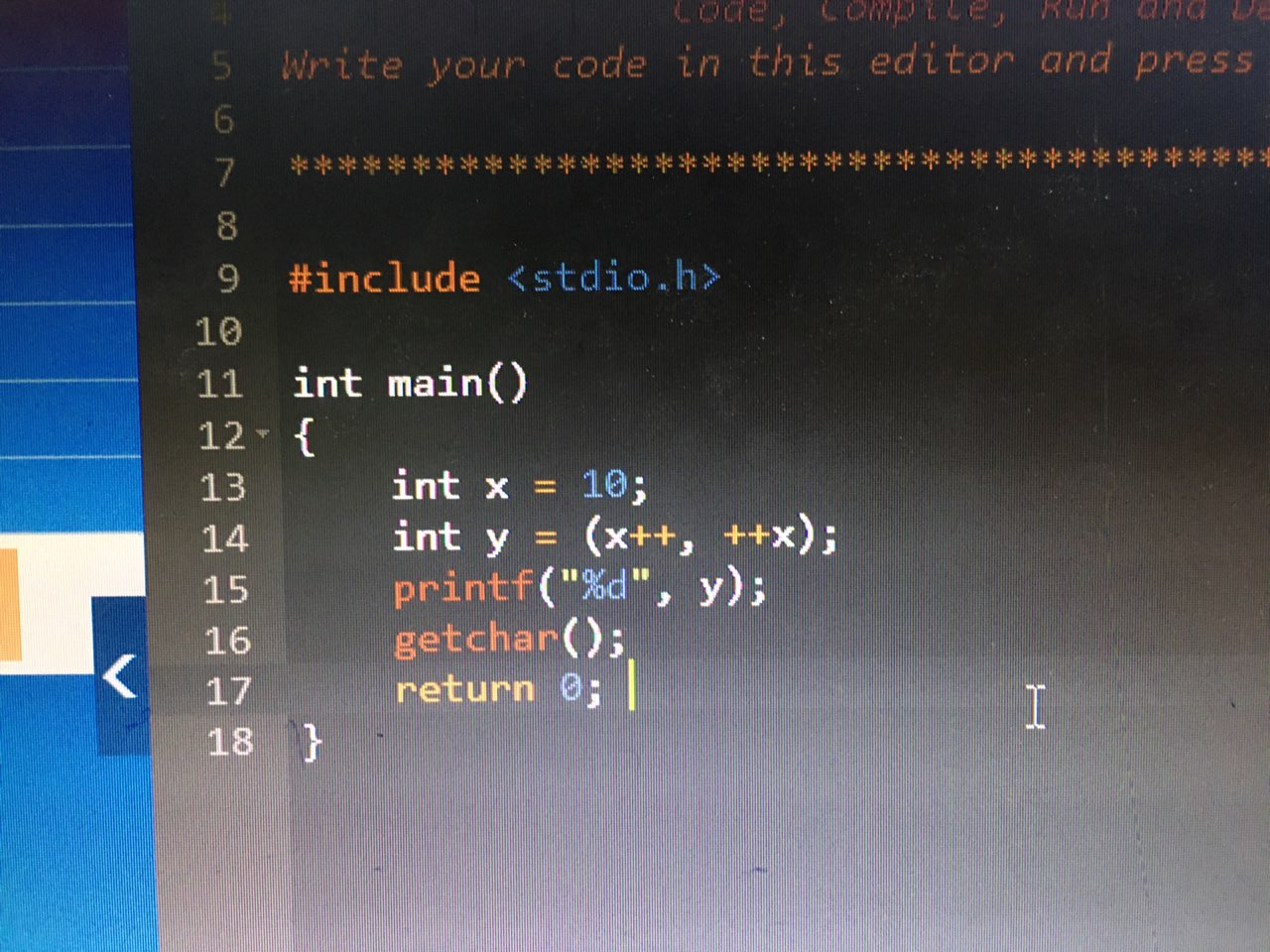
& x value will be 12
Anonymous
First ++ x execute after that x++ executed & value assiging to y is 22
no. first x++ is evaluated and its side effect is completed
Anonymous
then ++x
Achyut
Check on gcc compiler then you will known
Anonymous
the comma operator guarantees left to right evaluation. further, there is a sequence point between the lhs expression and the rhs expression of the comma operator
Anonymous
First ++ x execute after that x++ executed & value assiging to y is 22
both x and y will be 12
Emir
what if
int y = (x++, x++);
Achyut
no. first x++ is evaluated and its side effect is completed
Kkk, sorry i have not seen coma operator, I thought + operator
Your ans is correct
Anonymous
Kkk, sorry i have not seen coma operator, I thought + operator
Your ans is correct
if it was + operator, then the answer would have been undefined
Anonymous
+ operator doesn't specify left to right evaluation and there is no sequence point between the operand expressions
Achyut
if it was + operator, then the answer would have been undefined
That time sure first ++ x execute after that x++ execute
Anonymous
That time sure first ++ x execute after that x++ execute
order of evaluation is unspecified
Anonymous
in
store1 = f(x) + g(y);
store2 = f(x) + g(y);
it is completely possible that in the first calculation f(x) is evaluated first and in the second calculation g(y) is evaluated first
Achyut
Check on gcc
Anonymous
Any one know mic jack issue about window8
Anonymous
Check on gcc
what part of "order of evaluation is unspecified" is hard to understand
Anonymous
Hello please anyone has a "writing a bitmap" video from cave of programming....the video has been deleted online...its 11:08 seconds tutorial video
Anonymous
Do NOT ever do this
Anonymous
Modifying the same variable more than once in the same sequence point is undefined behavior
Anonymous
There is no answer
Emir
Modifying the same variable more than once in the same sequence point is undefined behavior
why doesn’t compiler display not warning?
Emir
how can provide that compiler warn me when i use Undefined Behavior
 Aswin
Aswin
Guys i am a student...i want to learn c programming....from beginning...how can i start that?
Renan
Guys i am a student...i want to learn c programming....from beginning...how can i start that?
Do you have programming experience?🤔