 yoav
yoav


i did :
bool strCmp(char* c1, char* c2){
if(strcmp(c1, c2) == 0){
return true;
}else{return false;}
and this gave me an a error
yoav
why?
 Ilya
Ilya
i did :
bool strCmp(char* c1, char* c2){
if(strcmp(c1, c2) == 0){
return true;
}else{return false;}
and this gave me an a error
Because this is completely wrong
Ilya
i did :
bool strCmp(char* c1, char* c2){
if(strcmp(c1, c2) == 0){
return true;
}else{return false;}
and this gave me an a error
I'd you write like this it shows you are not a c++ programmer at all, knowing nothing...
 Augmented
Ilya
Augmented
Ilya
i did :
bool strCmp(char* c1, char* c2){
if(strcmp(c1, c2) == 0){
return true;
}else{return false;}
and this gave me an a error
That is what your should have written
bool strCmp(char* c1, char* c2){
return !strcmp(c1, c2);
}
Ilya
i did :
bool strCmp(char* c1, char* c2){
if(strcmp(c1, c2) == 0){
return true;
}else{return false;}
and this gave me an a error
Or, in modern c++,
auto [](const char* c1, const char* c2) {
return !strcmp(c1, c2);
}
Anonymous
Lambda expression
yoav
Or, in modern c++,
auto [](const char* c1, const char* c2) {
return !strcmp(c1, c2);
}
strcmp return an int 0 for true other for false
and its not cpp is just c language
yoav
#include<stdio.h>
#include<stdlib.h>
#include<string.h>
#include<stdbool.h>
int main(){
char hello[] = "hello";
char bye[] = "bye";
str(hello, bye);
}
bool str(char* c1, char* c2){
if(strcmp(c1, c2) == 0){
return true;
}else{return false;}
return false;
}
errors:
source_file.c: In function ‘main’:
source_file.c:9:5: warning: implicit declaration of function ‘str’ [-Wimplicit-function-declaration]
str(hello, bye);
^
source_file.c: At top level:
source_file.c:11:6: error: conflicting types for ‘str’
bool str(char* c1, char* c2){
^
source_file.c:9:5: note: previous implicit declaration of ‘str’ was here
str(hello, bye);
^
why?
 olli
olli
Or, in modern c++,
auto [](const char* c1, const char* c2) {
return !strcmp(c1, c2);
}
this syntax is not correct either
olli
Why?
<source>: In function 'int main()':
<source>:5:10: warning: structured bindings only available with '-std=c++17' or '-std=gnu++17'
5 | auto [](const char* c1, const char* c2) {
| ^
<source>:5:10: error: empty structured binding declaration
5 | auto [](const char* c1, const char* c2) {
| ^~
<source>:5:13: error: expected primary-expression before 'const'
5 | auto [](const char* c1, const char* c2) {
| ^~~~~
<source>:5:29: error: expected primary-expression before 'const'
5 | auto [](const char* c1, const char* c2) {
| ^~~~~
<source>:5:10: error: invalid initializer for structured binding declaration
5 | auto [](const char* c1, const char* c2) {
| ^~
Compiler returned: 1
yoav
declare or define your method before main
ok its not like java we cant call function we didnt define before?
olli
ok its not like java we cant call function we didnt define before?
yes it's not like java, you need to at least declare them.
put bool str(char* c1, char* c2); before main (or the whole definition)
e.g.
// declare foo
void foo();
int main() {
foo();
}
// define / implement foo
void foo() {
}
 Artöm
Anonymous
Artöm
Anonymous
not sure what the auto is supposed to be, lambdas use trailing return types
I think he meant to write smth like that:
auto equal = <lambda>;
olli
I think he meant to write smth like that:
auto equal = <lambda>;
I think so too, although he could also mean to have auto as return type. (basically function as lambda).
Doesnt matter in the end anyway lol :D
Augmented
hello, friends... excuse me for the silly question... but...
which one is better to use?
"type" const or const "type"... e.g.
const int x=5;
or
int const x=5;
what about when it's const parameter for a function ? or a const pointer type
olli
hello, friends... excuse me for the silly question... but...
which one is better to use?
"type" const or const "type"... e.g.
const int x=5;
or
int const x=5;
what about when it's const parameter for a function ? or a const pointer type
const T is the same as T const - doesnt really matter which one you choose, just be consistent
for pointer it's const T * const ptr; or T const * const ptr;
The first const means the value the pointer points to is const, the second means the pointer is const
Augmented
const T is the same as T const - doesnt really matter which one you choose, just be consistent
for pointer it's const T * const ptr; or T const * const ptr;
The first const means the value the pointer points to is const, the second means the pointer is const
Yes, that's why I asked... because in the case with pointers it does matter
 Liam
Liam
Yes, that's why I asked... because in the case with pointers it does matter
They are just the same. Pick one and use it till the end of the world.
Augmented
They are just the same. Pick one and use it till the end of the world.
stay consistent to the very end :)
Augmented
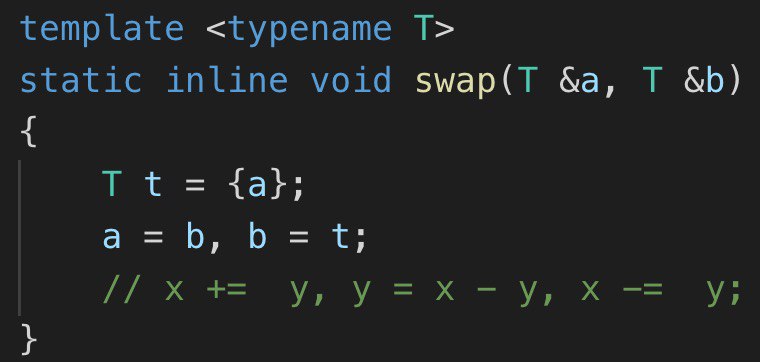 Liam
olli
Liam
olli
This is returned type of the function.
as mentioned above, lambda uses trailing return types
Hence your syntax is ill-formed
 Pavel
Pavel
hello, friends... excuse me for the silly question... but...
which one is better to use?
"type" const or const "type"... e.g.
const int x=5;
or
int const x=5;
what about when it's const parameter for a function ? or a const pointer type
There are people who prefer the first and who prefer the second.
Most projects I know just picked one of these (that their lead architect or whoever started the project preferred) and made it part of codestyle.
So you can really choose one and use it in your projects, and in others' projects use those that they prefer.
Ilya
as mentioned above, lambda uses trailing return types
Hence your syntax is ill-formed
Work out a little bit and make it correct in the context of the program you use
Artöm
hello, friends... excuse me for the silly question... but...
which one is better to use?
"type" const or const "type"... e.g.
const int x=5;
or
int const x=5;
what about when it's const parameter for a function ? or a const pointer type
Doesnt matter but should be consistent across project
Artöm
Some people do const T but T const&, because second is read right to left
 MᏫᎻᎯᎷᎷᎬᎠ
will c++20 have a better alternative for forward declaration with the help of modules??
Like if we have:
A() was defined before B()
Can A() call B() in modular system in C++20?!
Ilya
Artöm
will c++20 have a better alternative for forward declaration with the help of modules??
Like if we have:
A() was defined before B()
Can A() call B() in modular system in C++20?!
Overload resolution would go bonkers if it were allowed
Ilya
will c++20 have a better alternative for forward declaration with the help of modules??
Like if we have:
A() was defined before B()
Can A() call B() in modular system in C++20?!
What do you mean, do you mean forward class declaration ?
WHITE DEVIL
it mean declare the class
Ilya
Yeah
And function prototypes
Class declararion/definition and function declaration/definition are not related to each other
Artöm
How are overloads related to this?
Could be possible with epoches, but I think it contradicts the way C++ code compiles
MᏫᎻᎯᎷᎷᎬᎠ
What the hell are you saying?!
MᏫᎻᎯᎷᎷᎬᎠ
Who said they are connected?!
Me?! Not
Ilya
will c++20 have a better alternative for forward declaration with the help of modules??
Like if we have:
A() was defined before B()
Can A() call B() in modular system in C++20?!
OK , anyway, modules don't change anything in the language, don't add new semantics, they just provide another way of translation of source code.
MᏫᎻᎯᎷᎷᎬᎠ
What's wrong if I can use a function that was not declared but, straightforward defined after the upper function in the source
Ilya
will c++20 have a better alternative for forward declaration with the help of modules??
Like if we have:
A() was defined before B()
Can A() call B() in modular system in C++20?!
Can you explain what
A() was defined before B()
Can A() call B() in modular system in C++20?!means here ?
Ilya
will c++20 have a better alternative for forward declaration with the help of modules??
Like if we have:
A() was defined before B()
Can A() call B() in modular system in C++20?!
do you mean forward declaration of classes? Or what?
MᏫᎻᎯᎷᎷᎬᎠ
Can you explain what
A() was defined before B()
Can A() call B() in modular system in C++20?!means here ?
Like this
void A(){
B():
}
void B(){
}
This code should be valid!!
Ilya
Yeah
And function prototypes
Because, this term "forward declaration" is applied only to classes, not to functions and other things, AFAIR
MᏫᎻᎯᎷᎷᎬᎠ
Without adding a function prototype above void A()
Ilya
Like this
void A(){
B():
}
void B(){
}
This code should be valid!!
But it is valid even now, without modules.
MᏫᎻᎯᎷᎷᎬᎠ
Ilya
Without adding a function prototype above void A()
prototypes MUST be declared before using functions, with or without modules.
MᏫᎻᎯᎷᎷᎬᎠ
And it should disappear
MᏫᎻᎯᎷᎷᎬᎠ
Or be there optional
Ilya
I mean if you add function declaration first.
But modules cannot do anything with it, you just cannot call an abstract callable object before it is known
MᏫᎻᎯᎷᎷᎬᎠ
Like being an "implicit declaration" or sth