 Anonymous


i think these are secondary things. Remove it.
Anonymous
I'm currently focusing on logic mates !!
Anonymous
hello
Anonymous
im new here i hope to learn a lot from all of you
 X3eRo0
Try sublime text maybe
X3eRo0
Atom is good
These are text editors + some extra functionality
X3eRo0
Or as others said visual shit is good
 C.
C.
Pls suggest some good IDEs for C in Linux/windows..
Atom is not an IDE, but you can compile on Linux terminal.
Code::Blocks and Visual Studio for Windows if you really want an IDE
Anonymous
Please provide syntax of call by value method
X3eRo0
Atom is not an IDE, but you can compile on Linux terminal.
Code::Blocks and Visual Studio for Windows if you really want an IDE
On Linux I prefer sublime and the luxury of terminal
C.
On Linux I prefer sublime and the luxury of terminal
I am trying to learn Vim, actually, and I hate those messages from Sublime, but it's good
X3eRo0
Where a and b may be values or variables
 Artöm
X3eRo0
Artöm
X3eRo0
Is there any reverse engineer here?
X3eRo0
You also need good understanding of assembly
X3eRo0
Recently I participated in this Nul1CTF
X3eRo0
There were these crackmes written in go
X3eRo0
Go language
X3eRo0
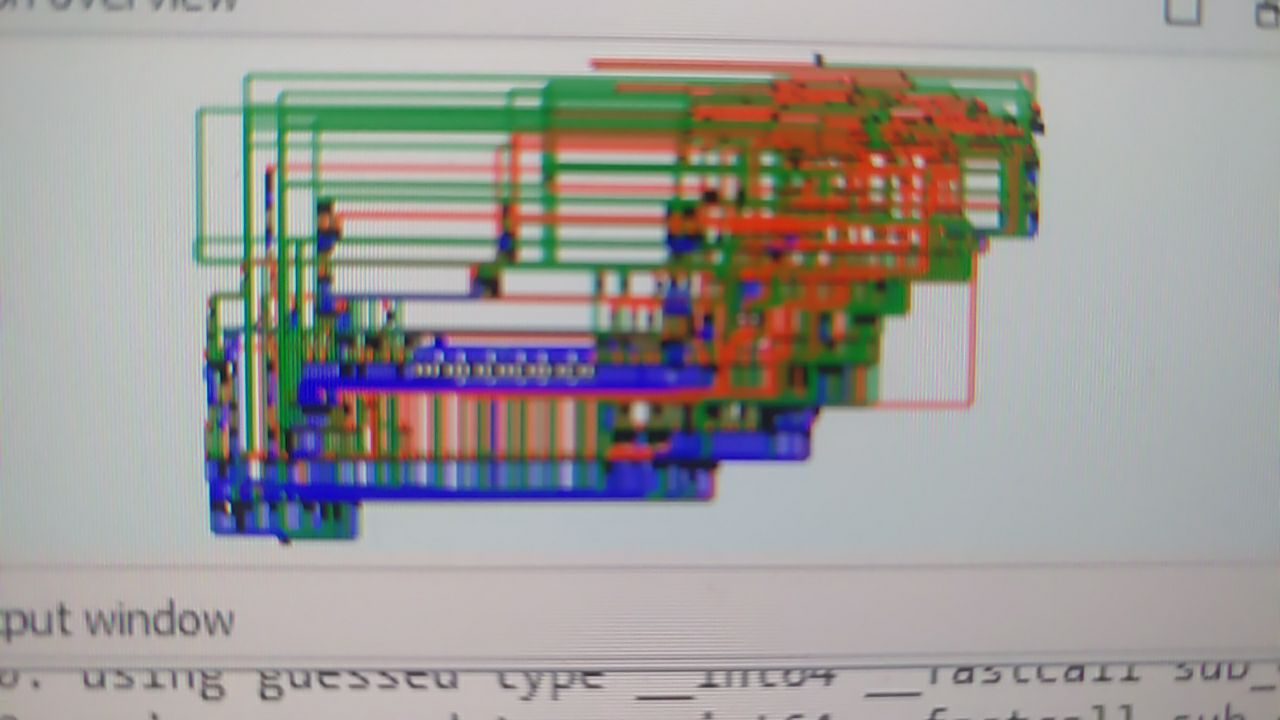
Literally a hello world program will contain 2000 functions when you open it in any disassembler
C.
X3eRo0
I had to reverse engineer that crackme it was obvious that you need experience here, recognize which function is standard function and which one is not
X3eRo0
It was obvious that I couldn't solve that crackme
X3eRo0
 C.
C.
lol
X3eRo0
 C.
C.
hey, how can I print on the screen without using printf/cout functions?
I know it is unpractical, but how bad is it?
 Wim
Wim
Literally a hello world program will contain 2000 functions when you open it in any disassembler
If that turns up over 2000 opcodes, its compiled from some high-level language; in pure ASM you'd only need a few
X3eRo0
Use write syscall
X3eRo0
Something like write(char *, size, stdout);
Anonymous
X3eRo0
I don't remember the exact order of arguments passed to write syscall
C.
I don't remember the exact order of arguments passed to write syscall
but isn't syscall assembly?
X3eRo0
If that turns up over 2000 opcodes, its compiled from some high-level language; in pure ASM you'd only need a few
Not 2000 opcodes but the total number of functions including _start() and standard golang functions
C.
Didn't know that you can access it in c
X3eRo0
Basically you can use write to print something to different file descriptors like stderr stdout and maybe stdin too
C.
oh
X3eRo0
I also made a working packer as a PoC which decrypts the binary during runtime
X3eRo0
Basically I encrypted a segment in the ELF with xor (I know weak crypto but it's sufficient for a PoC) and the binary decrypts the function and executes it and then encrypts it back
C.
nice
X3eRo0
https://pagedout.institute I wrote an article on binary packing in this magazine by Gynvael Coldwind page 46 pls check it out
X3eRo0
Programming magazine
X3eRo0
Free for community by community
C.
Issue #1?
C.
oh, found it lmao
Wim
So... Which issue was it?
X3eRo0
#1
C.
nice article man
Anonymous
X3eRo0
Bro that's not an ad
Anonymous
It is
X3eRo0
Bro it is related to programming and I just shared it with you guys
Anonymous
Bro it is related to programming and I just shared it with you guys
I'm not a bro for you, "bro"
Anonymous
Anonymous
Bro it is related to programming and I just shared it with you guys
And it is an ad, and before posting, you should ask admins
Anonymous
Anonymous
It looks weird anyway
(1 << i) & n
why does it look weird? I think it is used pretty much everywhere to check if (i+1)th bit of n is set or not.
Anonymous
It looks weird anyway
(1 << i) & n
https://www.geeksforgeeks.org/check-whether-k-th-bit-set-not/
Anonymous
https://www.geeksforgeeks.org/check-whether-k-th-bit-set-not/
if i-th bit is set in a number, it doesn't make the number the power of 2
Anonymous
no. It doesn't but I'm checking if the ith bit is set.
Anonymous
no. It doesn't but I'm checking if the ith bit is set.
So this is not a valid condition to check id the number is the power of two, right?
Anonymous
Nope. It is not.
Anonymous
So this is not a valid condition to check id the number is the power of two, right?
Found the error. I should have written ( 1LL << i ) instead of ( 1<< i ).
Anonymous
Signed overflow but my compiler didn't detect it. Don't know why.
Anonymous
how to enable all warning flags during compilation?