А от куда качать?
Да там же из boards manager же
 ㅤ

 Max
Michał Leśniewski's PicoSysLog Makes Remote Logging of Espressif ESP8266, ESP32 Projects a Breeze
Developer Michał Leśniewski has released a logging library that allows Espressif ESP8266 and ESP32 projects to send their logs to a syslog server for capture and analysis — and using it is as simple as swapping out your Serial commands. "I built PicoSyslog, a lightweight logging library for ESP8266 & ESP32 that sends logs to a Linux syslog server," Leśniewski explains of the tool. "It works as a drop-in replacement for Serial , so you can log messages just like you normally would, but now they’re written to serial and sent over the network too!" Traditionally, logging on microcontrollers has been a somewhat ephemeral thing — outputting status strings to the serial connection and hoping there's something paying attention on the other end. Some projects may require more permanent logging, which typically involves writing to a flash device or EPROM — but then those logs have to be manually retrieved. PicoSysLog, by contrast, sends log messages out over a network connection — targeting a remote server running a syslog daemon. "If you're already running a Linux server," Leśniewski notes, "it's probably already running a syslog server that you can use. If you want a dedicated syslog server, you can spin one up easily using Docker." Configuring the library is as simple as adding the IP address of your preferred syslog server, after which instructions like Serial.write , Serial.writeln , and Serial.printf can be swapped out for syslog.write , syslog.writeln , and syslog.printf — which send the messages to the remote server, with optional priority levels attached, and still prints them to the serial port too. Leśniewski has released the PicoSysLog library on GitHub under the GNU Lesser General Public License 3; more information, including some comments about how the code could be improved, is available on Reddit . PicoSysLog is a drop-in Serial replacement that sends messages to a Linux syslog server automatically. (📷: Michał Leśniewsk)
https://www.hackster.io/news/michal-lesniewski-s-picosyslog-makes-remote-logging-of-espressif-esp8266-esp32-projects-a-breeze-a536f6e997c9
 Alisher
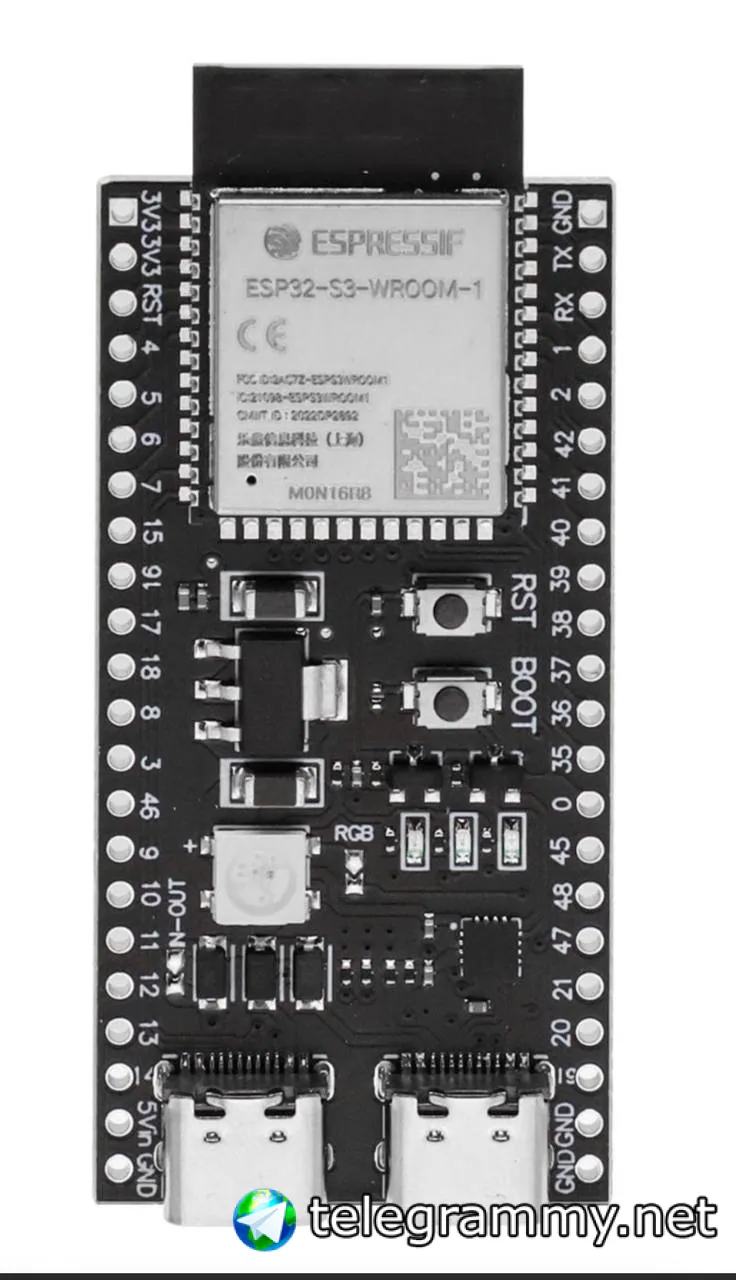 Alisher
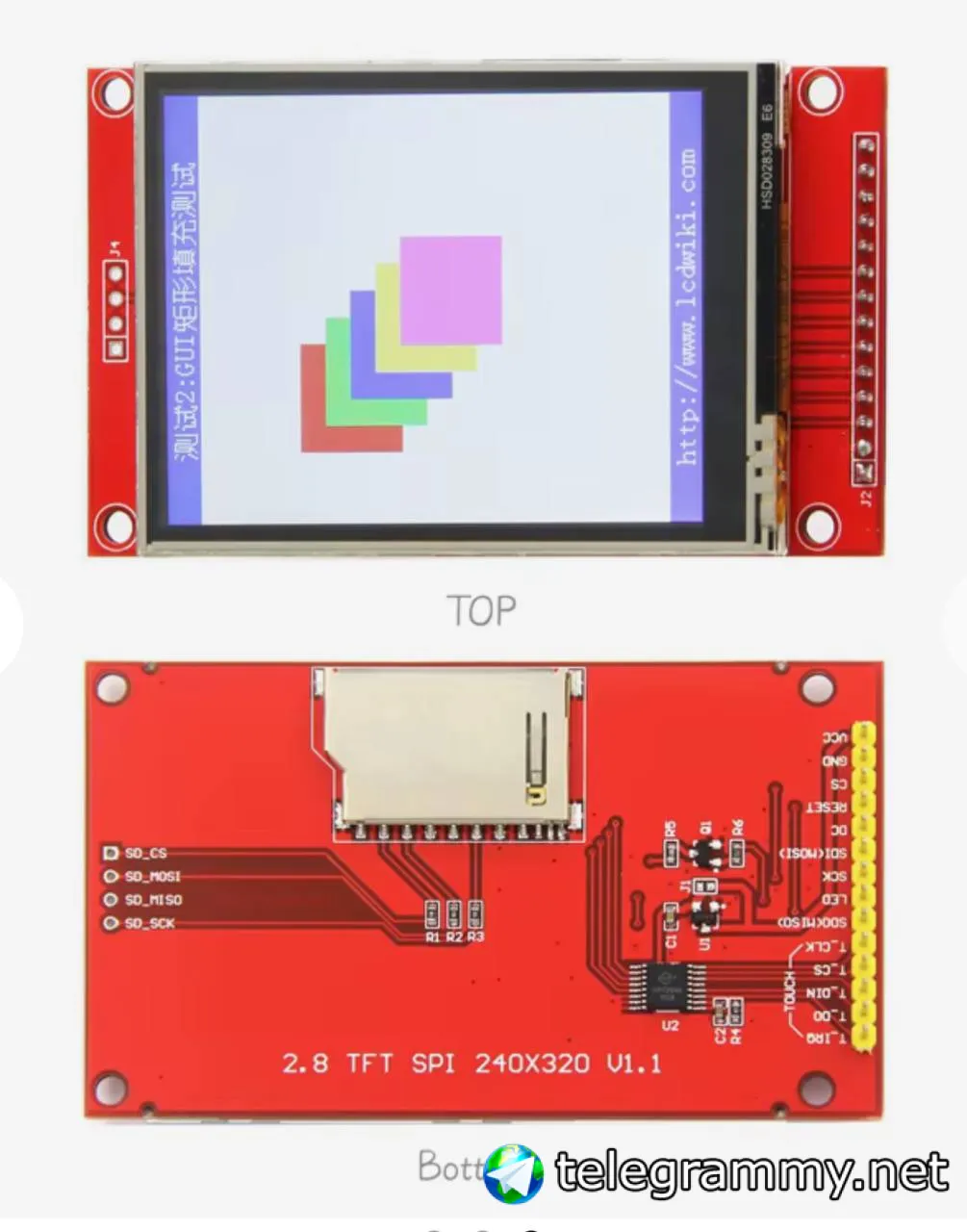 Alisher
ㅤ
Alisher
Для начала убедись в качестве соединения. Чем подключал?
Обычными проводами «мама-мама»
Тут дело именно в библиотеке TFT_espi, я попробовал другие библиотеки- adafruit и lovyan gfx там все прекрасно работает
Max
Ilia M
Беда еще в том что можно забыть таблицу ремапа. Вот это будет фатально
Пхахаха, я тоже про ремап хотел сказать, но потом... забыл 😂
 Дмитрий
Max
StickiNote Is Like a Digital Post-it for Smart Displays
Espressif’s ESP32 microcontrollers are incredibly popular for a reason: they are powerful, have integrated Wi-Fi and Bluetooth connectivity, and are very affordable. We often refer to them by the “ESP32” family name, but that actually includes several different models with varying capabilities. One of the newer models is the ESP32-P4, which Espressif designed for high-performance applications. Eric of That Project was able to take advantage of that performance to build this “StickiNote” app that runs on smart displays equipped with ESP32-P4 microcontrollers . This kind of app isn’t exactly novel. There are hundreds of similar apps and programs available for smartphones, computers, and even smart refrigerators. But Eric’s implementation is interesting because of the hardware on which it runs. Eric designed this as a sort of central household device where family members can leave notes for each other. Those could be grocery lists or reminders to take out the garbage. The app itself looks really nice, with a pleasant GUI, on-screen keyboard, space for several notes, and more. And it runs very smoothly. You could install a similar app on something like an iPad, but that would be expensive. You’d also have to deal with iOS updates, long boot times, and all of the other inconveniences that come with a general-purpose device like a tablet. Eric’s StickiNote only requires two pieces of hardware: an ESP32-P4 development board (Eric used a Waveshare ESP32-P4-NANO) and a compatible MIPI DSI screen (Eric used a Waveshare 10.1” touchscreen model). Those are available together as a kit from Waveshare for $86.99, though the kit is currently on backorder. Eric says that the use of the ESP32-P4, instead of one of the other ESP32 models, was critical for the success of this project. The app’s GUI is quite resource-intensive and it needs a lot of processing power to run smoothly. The ESP32-P4 has that, thanks to the dual-core RISC-V CPU that can run at up to 400MHz. Compare that to, say, the ESP32-C3 (designed for low-power applications), which has a single-core RISC-V CPU running at 160MHz, and you can see why it makes such a difference. With less than $100 spent on hardware and the installation of StickiNote, you can put a very useful purpose-built productivity device in your home to help your family stay organized.
https://www.hackster.io/news/stickinote-is-like-a-digital-post-it-for-smart-displays-d170d561a84f
Alisher
Alisher
🅴🆅🅶🅴🅽🅸🆈
pashist
Товарищи, нужен вектор: что за приборы используют? Делают самоделка ЕСП и тд и показывают график потребления тока! Рабочий режим, слип и всё такое.
Так вот каким прибором готовым или самодельным можно это реализовать? Есть ли хорошие проекты?
Спасибо, обнимаю :)
 Денис
Денис
Товарищи, нужен вектор: что за приборы используют? Делают самоделка ЕСП и тд и показывают график потребления тока! Рабочий режим, слип и всё такое.
Так вот каким прибором готовым или самодельным можно это реализовать? Есть ли хорошие проекты?
Спасибо, обнимаю :)
аа график?, тогда продвинутый мультиметр😁, но и самоделка тоже может сойти (минимально serial plotter и какая-нибудь ina226)
 ok-home
аа график?, тогда продвинутый мультиметр😁, но и самоделка тоже может сойти (минимально serial plotter и какая-нибудь ina226)
ток килоамперы ? Напряжение киловольты ?
Денис
ток килоамперы ? Напряжение киловольты ?
обычные мультиметры покажут с разрешением в 1мКа, другой вопрос точности.
килоамперы?, это который 1млн мА? это esp32?
напряжение киловольты (1000V?)👀
я конечно не знаю нужено ли автору такие напряжения😄, но показалось что нет и речь идет о графике потребления мк с разными режимами питания
 Ivan
 Tonchik
Ivan
https://www.chipdip.ru/product/k1182pm1r-2021g
Спасибо, это хороший вариант, но хочется еще использовать wi-fi.
Tonchik
Спасибо, это хороший вариант, но хочется еще использовать wi-fi.
Ну так его на PWM выход ESP и вперед )) оно само ловит железно переходы синусоиды и «правильно» ее режет . Работают накаливания и работали регулируемые Икеа лед
 𝓪𝓵𝓮𝓼𝓱𝓪_𝓼𝓱
Всем привет, помогите туплю, удалил прошивку на lilygo t-display s3, т. к. в инструкции было написано, а теперь не знаю как заново залить, заливаю, а дисплей не показывает ничего
Tonchik
Для большей мощности симистор к ней
Ivan
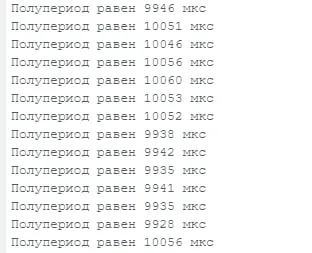
У тебя погрешность измерений около ноль целых одной десятой процента и бывают скачки в 1%
Согласен, но есть с чем сравнивать. До этого пробовал stm32f103 (blue pill) погрешность (9996 - 10002) мкс, разброс в 16 раз меньше.
ok-home
Согласен, но есть с чем сравнивать. До этого пробовал stm32f103 (blue pill) погрешность (9996 - 10002) мкс, разброс в 16 раз меньше.
а измерять то тебе зачем ? известно по госту точность +-0,2 гц.
синхронный шим - смотри либы MCPWM Sync, (аппаратный синхронный шим), если уж сильно измерить хочется там же в mcpwm есть блок Capture
Ivan
а измерять то тебе зачем ? известно по госту точность +-0,2 гц.
синхронный шим - смотри либы MCPWM Sync, (аппаратный синхронный шим), если уж сильно измерить хочется там же в mcpwm есть блок Capture
Тут больше спортивный интерес. Удивился почему esp дает большую погрешность чем stm, думал что будет точно не хуже. Заподозрил, что использую не тот функционал. Вот и спросил.
Ivan
Max
You Don’t Need High-Res Graphics to Have Fun Playing Games on the Blink Boy Handheld Console
So much of video game technology advancement over the past 60 years has been focused on improving graphics. For instance, the jump from fourth-generation to fifth-generation consoles, like the Nintendo 64, was incredible, as 3D games were suddenly commonplace. But as mainstream video games get closer and closer to photorealism, many gamers have become convinced that graphics are far less important than strong gameplay. With that in mind, Chris Parker of the Tech Random YouTube designed the low-res, open source Blink Boy handheld console . When we say “low-res,” we’re not talking about 720p or even 480i. Blink Boy’s display is an 11×11 grid of individually addressable RGB LEDs. Even the original Game Boy’s 160×144 screen seems positively lavish in comparison. Though, of course, the full RGB color certainly adds depth that wasn’t possible on the Game Boy’s four-shade monochrome screen. The Blink Boy’s controls are similarly unconventional. It has just three buttons and a rotary encoder with another built-in button. Those and the LEDs solder onto a custom PCB, which also hosts an ESP32-S3 microcontroller and the lithium battery charger circuitry. The custom PCB and battery fit into a very well-designed 3D-printable enclosure. It is about as minimalist as a design can get: basically, just a block. But it looks really nice—especially because Blink Boy took advantage of the multi-material printing capabilities of a Prusa XL to add a nice contrasting “BLINK BOY” logo on the back. As a demonstration, Parker programmed a Snake game that runs on the hardware. That isn’t groundbreaking, but it is undeniably addicting and the colorful, chunky graphics make it really pleasant to look at. This is an open source project, so hopefully other contributors will come up with some creative games that make the most of the low-res, high-color display. However, it doesn’t stop there. Parker had more in mind than just gaming. Because the ESP32-S3 has Wi-Fi and Bluetooth connectivity, Parker was able to create apps that communicate with external devices. One example is a “Cast App” that lets Parker control his huge LED wall using the Blink Boy. It does that through MQTT messages coordinated by Home Assistant. Blink Boy will never replace a modern console, but it has all kinds of interesting potential that is sure to appeal to many.
https://www.hackster.io/news/you-don-t-need-high-res-graphics-to-have-fun-playing-games-on-the-blink-boy-handheld-console-ed47d85ac9ab
ok-home
Тут больше спортивный интерес. Удивился почему esp дает большую погрешность чем stm, думал что будет точно не хуже. Заподозрил, что использую не тот функционал. Вот и спросил.
измерять через прерывания в ESP можно, но не стоит
для этого есть RMT, PCNT, если все равно в MCPWM зашел то MCPWM Capture, это все аппаратные модули отвязанные от времени обработки прерываний
Ivan
 Ruslan
Vlad
2G не хватит?
Опсосы уже от 3G оборудования потихоньку избавляются. А даже на нём нормального Тырнета не припомню, чего про минимальный GSM = 2G говорить
Ruslan
не путай 3гэ и 2G!
Ruslan
Сети 2G тоже находятся в процессе выключения или рефарминга под LTE и 5G, но просуществуют дольше 3G, так как в них работает большое количество M2M-устройств. Полное прекращение работы GSM в РФ аналитики планируют к 2030 году. В России приоритет отдан сетям 4G.
Ruslan
не все доживут до закрытия 2G
Vlad
не все доживут до закрытия 2G
Вопрос в стабильности подключения и тупо покупки роутеров. Раньше мы покупали удешевленные 3G роутеры (по сравнению с 4), но и их бросили производить уже.
Ruslan
в общем, у меня 2G отлично работает, как приспичит перейду на 4G, предлагай )))
ㅤ
в общем, у меня 2G отлично работает, как приспичит перейду на 4G, предлагай )))
Может лучше сразу на 5г?
Vlad
но к примеру, вот роутер наш iRZ и литовско-латвийский Teltonika (оба 4G, с двойной разницей в цене не в нашу пользу) - чувствительность\стабильность связи второго - ну сильно лучше, с одной и той же выносной на кабеле антенной.
Max
https://www.youtube.com/watch?v=vBjyXJAoT9o
Vlad
А от куда качать?
все-таки поизучать стоит новичку платформой как пользоваться, хотя бы тут: https://arduino.ru/
опять же тут вон рядом есть тема "Книги / Ссылки"
Денис
Опсосы уже от 3G оборудования потихоньку избавляются. А даже на нём нормального Тырнета не припомню, чего про минимальный GSM = 2G говорить
3G может и уйдет, но 2G еще долго нет
это правильно подметили выше.
на 2G работает очень много охранного оборудования, даже просто умные устройства на его базе. 2G в разы экономнее жрет энергию + ловит абсолют
Денис
Может лучше сразу на 5г?
тут скорее на NB-Iot/Lte-M
это про iot, но там не так доступно как в gsm.
Ilia M
Всем привет, помогите туплю, удалил прошивку на lilygo t-display s3, т. к. в инструкции было написано, а теперь не знаю как заново залить, заливаю, а дисплей не показывает ничего
Мне кажется в прошивке тестовой твоей на дисплей уходят другие пины. У меня был похожий модуль, дисплей i2c был по факту на других пинах
Ruslan
В спутник?
 axi
Решил сделать ход конем: много новой инфы, не хочу кусками ее получать, может кто посоветует книгу для знакомства с ардуино и азами радимонтажа (резисторы и т.д.)?
Сам разработчик но в этой теме я не разбираюсь
Например купил диод и не знал что нужен резистор еще
axi
Решил сделать ход конем: много новой инфы, не хочу кусками ее получать, может кто посоветует книгу для знакомства с ардуино и азами радимонтажа (резисторы и т.д.)?
Сам разработчик но в этой теме я не разбираюсь
Например купил диод и не знал что нужен резистор еще
Буду благодарен если кто-то подскажет с чего начинал
Понятно что можно будет нагуглить просто решил у вас спросить
Ruslan
Начни с easyelectronics.ru
Vlad
народ, а что такое IEPE-интерфейс вообще у датчиков ? он как-то стандартизован ?
что за приемник нужен для их чтения ?
уупс, походу, это аналоговый интерфейс с коаксиальной экранированной передачей, с питанием по той же линии данных
 Сергей
чуваки вопрос, встала задача к esp32 в usb дырку скажем так, воткнуть GSM
сама суть вопроса в том, что как мне с этим gsm работать, типо как через вайфай, может быть ethernet, может компоненты или либы какие есть
тема для меня супер новая и неизведанная степь
Vladimir
чуваки вопрос, встала задача к esp32 в usb дырку скажем так, воткнуть GSM
сама суть вопроса в том, что как мне с этим gsm работать, типо как через вайфай, может быть ethernet, может компоненты или либы какие есть
тема для меня супер новая и неизведанная степь
Почему именно через USB? Другие варианты не рассматриваются?
Сергей
Почему именно через USB? Другие варианты не рассматриваются?
ну есть просто уже в наличии у нас
Сергей
вавшаровские gsm на usb
Сергей
и впринципе конфигурация позволяет просто воткнуть
Ilia M
Сергей
перед этим конечно стоит более важный вопрос, связанный с задачами и распределением памяти
Сергей
но типо модуль на самом деле оч кайфовый
Сергей
после lilygo s3 с мелким экраном
Сергей
это что-то невероятное для меня
Сергей
как музыкант и 3д путь будет модельер
Сергей
я полюбил с ним программирование
Сергей
так же есть более важный вопрос, так как она у меня с дисплеем, я использую board support package, для вывода на экран
знаю что lvgl по сути крутится на отдельной толи таске, толи целом ядре
у меня 16 мб dram и 32 мб psram
после инициализации дисплея и выделения для него буфера из psram удается создать дополнительно только одну задачу, в моем случае допустим на wifi
но мне нужно еще в асинхрон i2c и ble, потому что вайфай уже создает динамически нужный вывод lvgl картинки
проведя микро расследование, я пришел к выводу что проблема в неправильном распределении psram, то есть дисплей хавает много на себя и графику, плюс одна задача довольно массивная, хоть и память позволяет создать невероятное множество этих задач, но я пока не пониманию почему возникает ошибка
сейчас отмечу старые сообщения здесь по этому вопросу
Сергей
сейчас точно знаю что проблема в неправильном распределении psram между дисплеем и задачами, убрав ble на отдельный esp32c6, погоды не сделало, по прежнему была задача по i2c а так же задача uart
перепробовал все гпт боты с грусти, даже какой-то от espressif, перелопатил документации и до сих пор не понимаю что я делаю не так, потому что menuconfig в стоке на это не рассчитан, асинхрон очень важен, а альтернатив я не увидел адекватных